
Key Moments

Summary & Script
Gemini Enterprise app: Building the connected enterprise
Source: https://www.youtube.com/watch?v=tBw7IVlnwdY
Video ID: tBw7IVlnwdY
Overview
The video introduces Gemini Enterprise, a unified AI platform designed to eliminate the fragmentation caused by multiple AI tools, siloed data, and governance headaches in modern enterprises. Demetri, Sammy, and Dimitri walk through the three core pillars of the product—creative “ask and create,” agent‑driven execution, and deep contextual awareness—showing how they combine to form a single “front‑door” for the whole organization. Real‑world usage is illustrated with a case study from Signal Iduna, a large German insurer, highlighting how the platform can be rolled out at scale while meeting strict compliance requirements.
New Features & Announcements
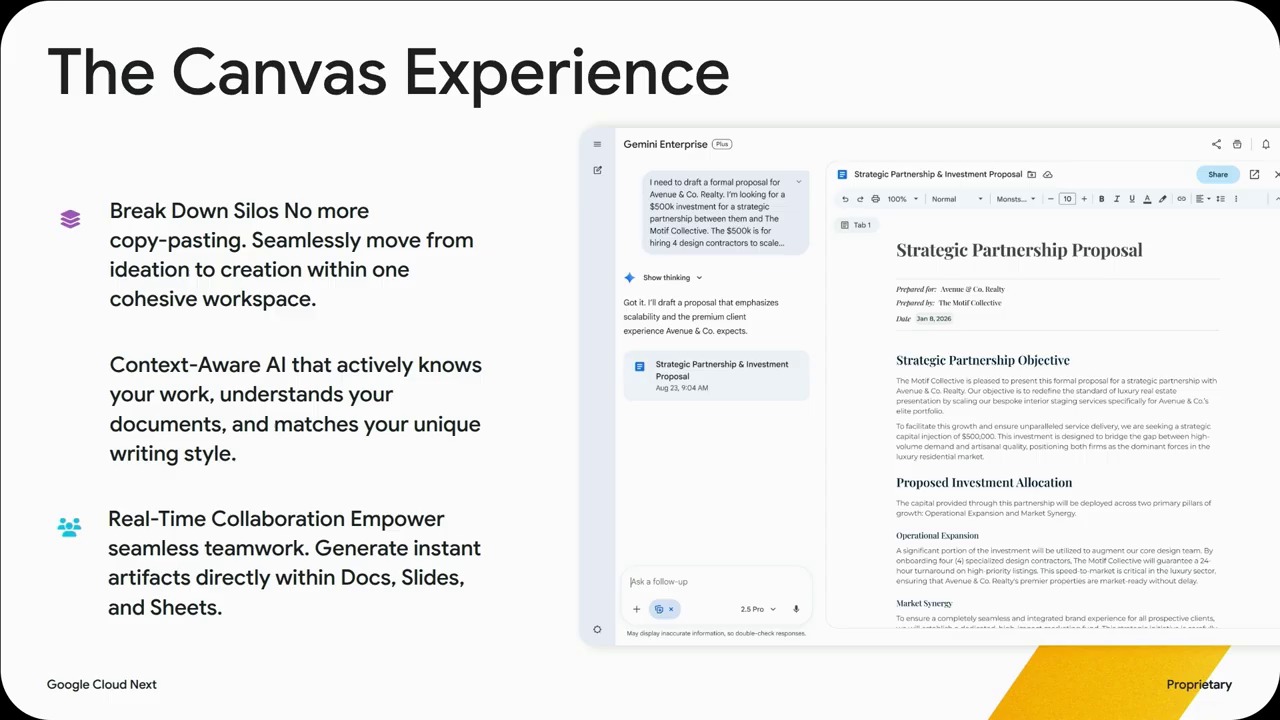
Canvas (interactive creation space) – An integrated, AI‑driven editor that auto‑generates drafts, slide decks, and other assets directly from chat context, with native support for Google Workspace or a built‑in HTML editor.
Availability: Public PreviewAgent Designer (in‑app workflow builder) – Drag‑and‑drop interface with natural‑language templates, conditional loops, human‑in‑the‑loop checks, and debugging tools for building custom agents and orchestrations.
Availability: Preview, early access program (EAP) upcomingGemini Enterprise Projects (persistent team workspaces) – Bounded, shareable AI‑powered project spaces that retain context, files, and chat history, enabling collaborative co‑creation and AI‑generated project overviews.
Availability: Currently in preview
Topics Covered
- Enterprise AI adoption trends – Rapid growth shown by Google Trends; 35 % of employees now use agents, with exec spend rising > 25 % YoY.
- Pain points of today’s AI stack – Data silos, tool fatigue, budget opacity, and weakened security/governance.
- Fabric of universal intelligence – The overarching framework that makes Gemini Enterprise the single front‑door for all AI interactions.
- Pillar 1 – Ask & Create
- Gemini 3.1 Pro & Flash models optimized for complex reasoning.
- Generative media (Nano Banana 2 for images, Veo 3 for video).
- Real‑time voice assistant and multimodal document ingestion (PDF, CSV, code).
- Canvas workflow for documents and slide decks, with seamless Google Workspace integration or native editors.
- Pillar 2 – Get It Done with Agents
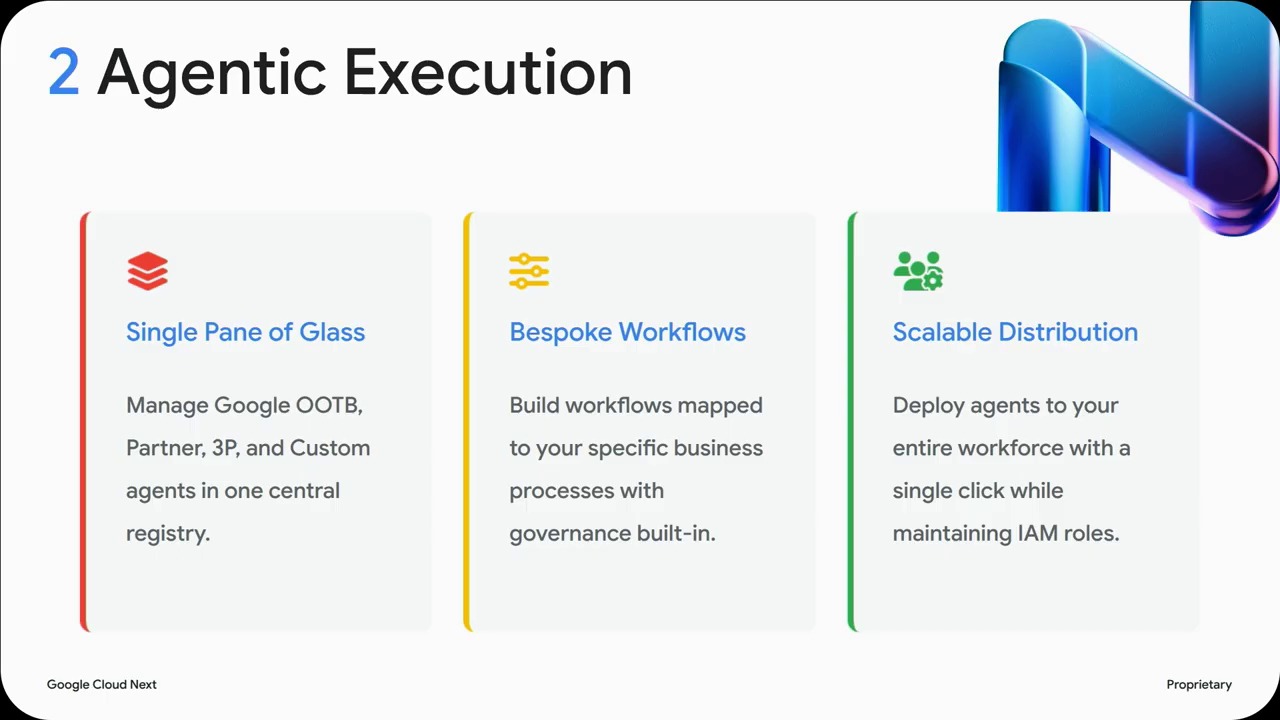
- Central registry for native, pre‑built, third‑party, and custom agents.
- One‑click company‑wide deployment with built‑in IAM, policies, and governance.
- New Agent Designer: natural‑language templates, conditional logic, deterministic & agentic orchestration, human‑in‑the‑loop verification, iterative feedback loop, playback/debug tools.
- Pillar 3 – Deep Integrated Context
- Continuous access to Drive, Gmail, Calendar, Outlook, OneDrive, etc., learning user patterns and project specifics.
- Saved “memories” for brand voice, formatting preferences, etc.
- Collaboration & Persistence
- Introduction of Gemini Enterprise Projects as bounded, shared AI workspaces.
- Persistent context eliminates re‑uploading files; AI answers stay grounded in project data.
- Built‑in group chat where humans and AI co‑author assets in real time.
- Governance & Security
- Centralized admin console, full audit logs, model‑level armor (prompt‑injection protection, PII masking).
- Leverages existing IAM for least‑privilege controls.
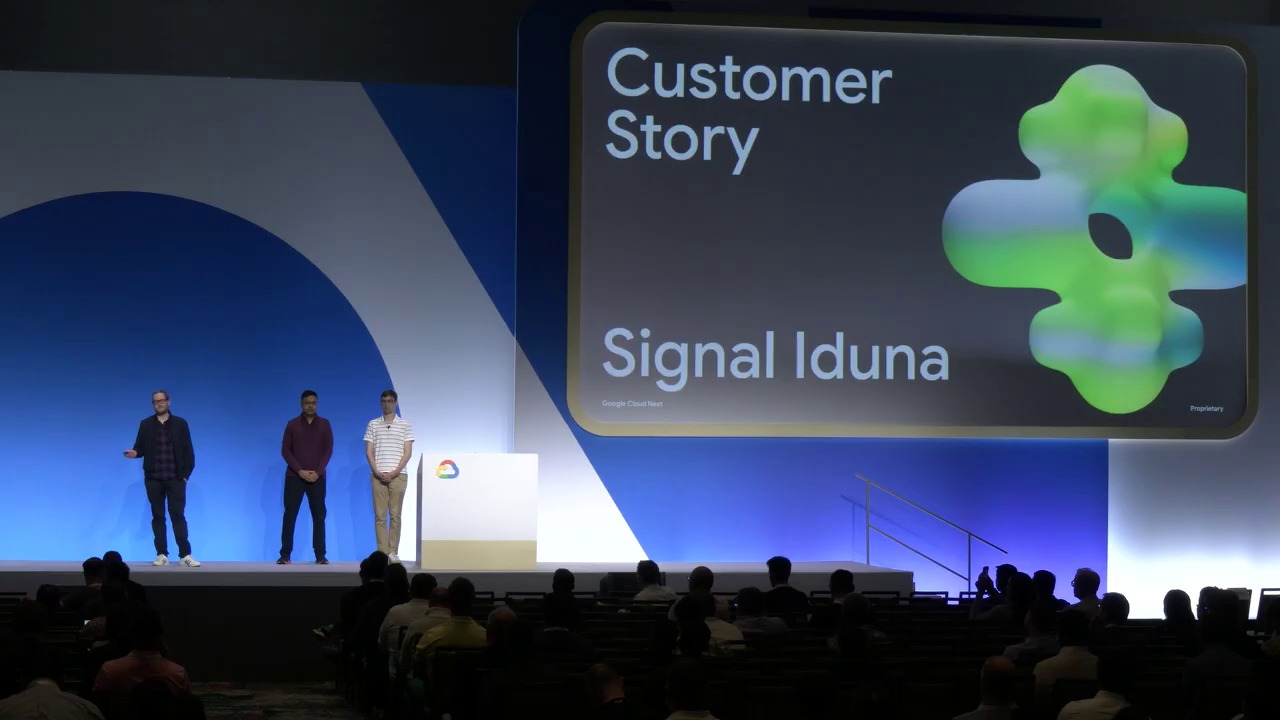
- Customer Story – Signal Iduna
- 120‑year‑old insurer transitioning from paper to AI using Gemini Enterprise (rebranded internally as “Cozy”).
- Emphasis on governance, AI literacy, and organization‑wide rollout.
Key Takeaways
- Gemini Enterprise provides a single, secure front‑door for all AI interactions, reducing tool fatigue and improving governance.
- The Canvas editor turns conversational prompts into fully‑featured documents or slide decks without leaving the app.
- The Agent Designer lets any employee build sophisticated, governed agents using a visual, low‑code interface.
- Persistent Project workspaces keep context alive, enable team‑wide collaboration, and generate AI‑driven project overviews for new stakeholders.
- Governance is baked in: audit logs, model armor, and native IAM integration ensure compliance with strict enterprise policies.
- Real‑world adoption at Signal Iduna demonstrates that large, regulated organizations can modernize with Gemini Enterprise while maintaining trust.
Notable Quotes
- “The era of copy‑pasting from an AI chat window is behind us.” – Sammy Akram
- “We built a single pane of glass for your entire organization… a central registry where you can manage all of your agents, tools, and skills in one place.” – Dimitri
- “True intelligence starts with understanding who you are and how you work.” – Sammy Akram
- “Trust is non‑negotiable. Ungoverned AI is a security risk, full stop.” – Demetri
- “Gemini Enterprise Projects… transforms the workspace into a shared brain.” – Sammy Akram
Podcast Script
JORDAN: Welcome to Episode 7 of SlackCasts by PodSlacker — where AI does the watching so you can do the listening. If you want a richer experience with today's episode, visit PodSlacker dot com slash SlackCasts — you'll find a written summary, key frame moments from the video, and an interactive AI chat to explore the topic as deep as you like. Now let's get into it.
MIKE: Let’s kick off with the problem statement that Demetri laid out: enterprises are drowning in a patchwork of AI tools, data silos, and a governance nightmare. The Google Trends graph he showed—a classic hockey stick—really drives home that 35 % of employees are already using agents, yet budgets and security are spiraling.
JORDAN: Exactly. And that fragmentation isn’t just a productivity issue; it’s a risk vector. When you have agents accessing separate data stores, you lose auditability and the ability to enforce least‑privilege policies consistently. That’s the gap Gemini Enterprise claims to close with a single “front‑door.”
MIKE: Sammy introduced the “fabric of universal intelligence” as the architectural glue. It’s essentially a unified intelligence layer that sits on top of all your existing SaaS connectors—Drive, Gmail, Outlook, OneDrive—so the AI can act as an extension of the actual workplace rather than a detached chatbot.
JORDAN: Right, and that fabric is embodied in three pillars. Pillar 1 is “Ask & Create,” which leans heavily on Gemini 3.1 Pro and Flash for high‑frequency reasoning. The models are tuned for enterprise workloads: lower latency, deterministic outputs when needed, and enhanced grounding on internal corpora.
MIKE: The creation side is where Canvas shines. Instead of copy‑pasting from a chat window, Canvas auto‑spawns a document or slide deck, pulls in the chat context, and embeds a live editor. For Google Workspace users, it’s an in‑app Google Docs/Slides experience; for non‑Workspace users, there’s a native HTML editor with AI sliders for tone, length, and style.
JORDAN: And those sliders aren’t just cosmetic—they hook into the underlying prompt engineering pipeline, adjusting temperature, top‑p, and even prompting the model to follow a specific style guide stored as a “memory.” The version‑control integration means every iteration is persisted in Drive, satisfying compliance audit trails.
MIKE: Speaking of compliance, the real kicker is that Canvas outputs are automatically saved with full audit metadata: who generated the draft, which model version was used, and what source files were referenced. That level of provenance is essential for regulated sectors.
JORDAN: Moving to Pillar 2, the Agent Designer is a low‑code, drag‑and‑drop workflow builder baked into the platform. The UI exposes natural‑language templates like “Summarize quarterly sales from CSV” but also lets power users snap together conditional loops, branch logic, and human‑in‑the‑loop checkpoints.
MIKE: The ability to mix deterministic orchestration with agentic reasoning is a strategic differentiator. You can tell an agent to retrieve data deterministically via a secure API, then hand off to a generative model for narrative synthesis, all within one visual flow. That balances control with creativity.
JORDAN: And because the registry is centralized, any agent—whether native Google, a pre‑built data‑insights agent, third‑party, or a custom Python function—inherits the organization’s IAM policies. One‑click rollout means you’re not manually provisioning roles per agent; the platform maps roles to policy bundles automatically.
MIKE: The preview of the debugging tools is also worth noting. Playback of agent runs, step‑by‑step state inspection, and prompt‑suggestion AI let developers iterate quickly while keeping a human in the driver’s seat. That’s crucial for building trust in mission‑critical workflows.
JORDAN: Pillar 3 is all about deep integrated context. Gemini Enterprise continuously syncs with users’ productivity suites, learning calendar cadence, project stakeholders, and even brand‑voice preferences stored as “saved memories.” It’s a living knowledge graph rather than a static prompt.
MIKE: That solves the classic “prompt engineering hell” where you have to paste the same boilerplate each time. The system can infer, for example, that a “project update” should be addressed to the existing sprint team, use the company’s tone guidelines, and include KPI tables pulled from the latest spreadsheet—all without additional prompts.
JORDAN: The persistent context also feeds into the new Gemini Enterprise Projects feature. Instead of isolated chats, a project creates a bounded workspace with its own context boundary, file attachments, and dedicated agents. AI responses are scoped strictly to what's inside that project, preventing data leakage.
MIKE: From an operational standpoint, this is a game‑changer. New stakeholders can jump into a project, get an AI‑generated overview, and start asking questions that are instantly grounded in the project’s artifact history. No more endless hand‑off meetings.
JORDAN: And the co‑creation chat inside Projects is more than a comment thread; it’s a real‑time, AI‑augmented collaboration surface. When one teammate asks for a launch email and another adds “make it more urgent,” the model regenerates the draft on the fly, preserving version history. That aligns creative feedback loops with AI execution.
MIKE: Governance is woven throughout. The admin console exposes full audit logs for every invocation, model‑level armor protects against prompt injection, and PII masking runs automatically on inbound/outbound data. Plus, the platform inherits the organization’s existing IAM, so you don’t have to rebuild your security stack.
JORDAN: The model‑armor is built on a combination of static analysis and a lightweight adversarial detector that flags anomalous prompt patterns before they reach the LLM. It’s a pragmatic approach—no false positives that block legitimate business queries, but a solid safety net for regulated environments.
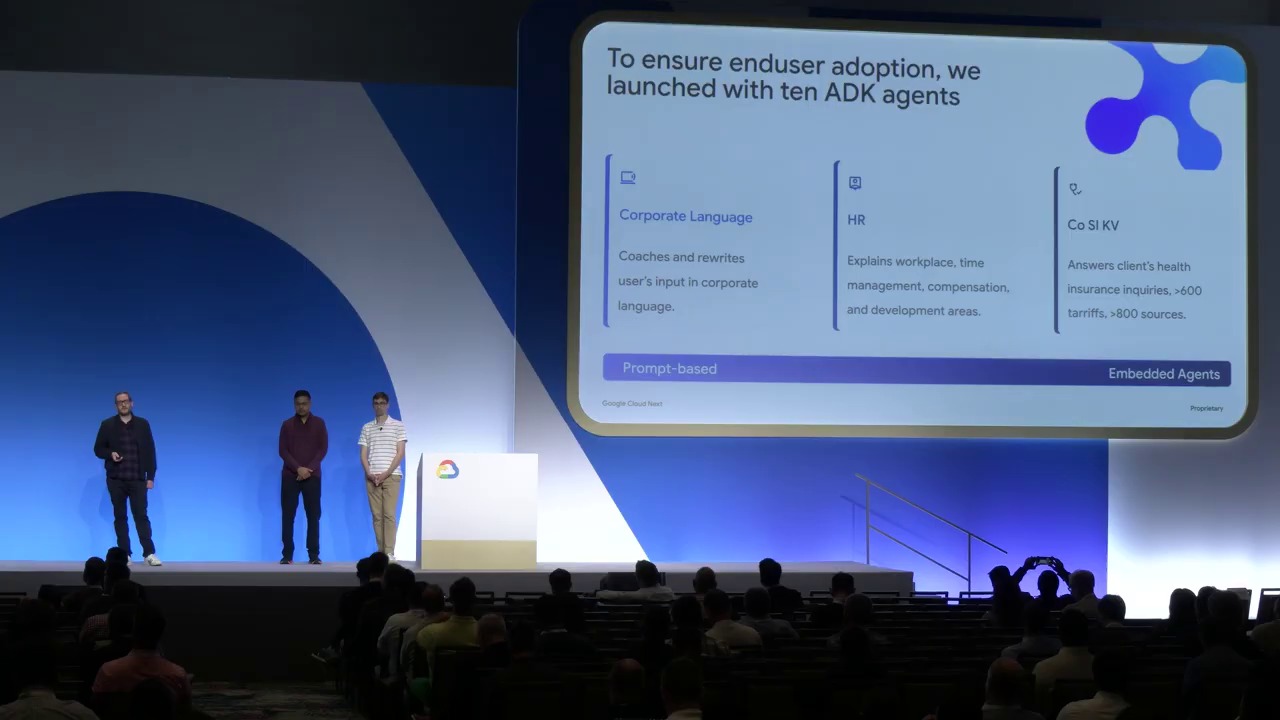
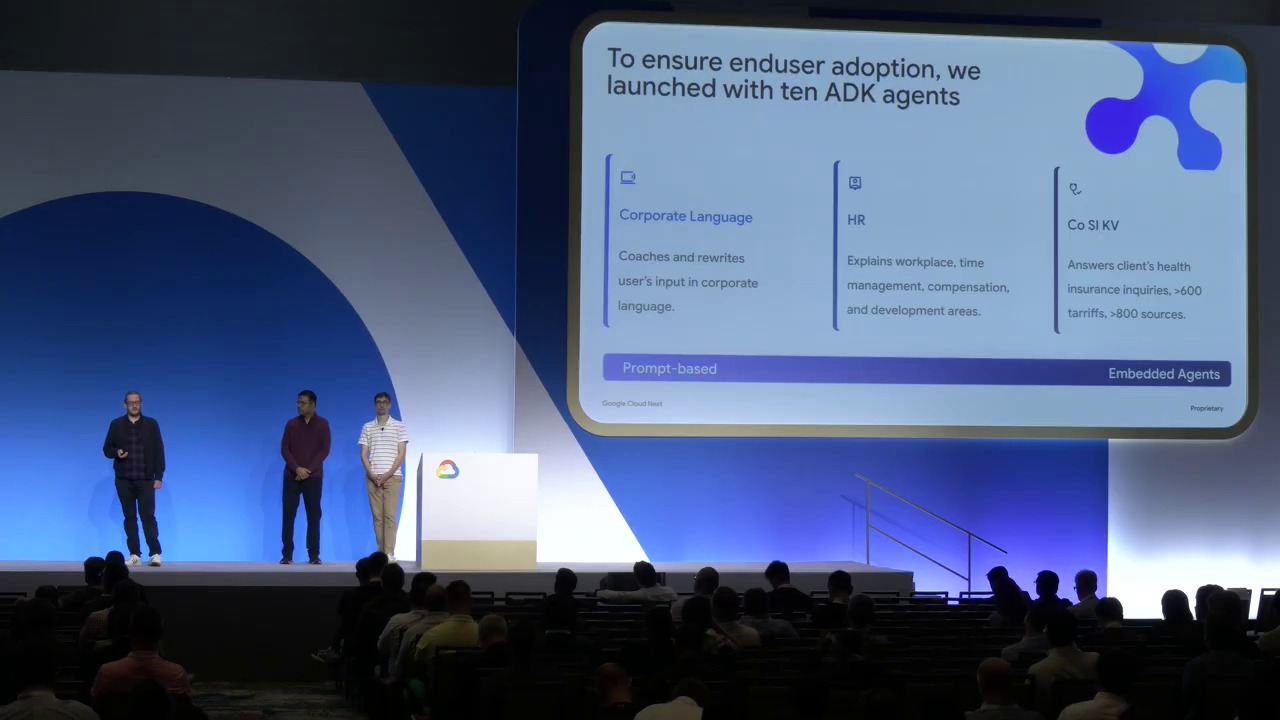
MIKE: Then we have the real‑world proof point: Signal Iduna. Florian walked us through how a 120‑year‑old insurer adopted Gemini Enterprise—rebranded internally as “Cozy”—to modernize from paper to AI while satisfying Germany’s strict data‑privacy rules.
JORDAN: Their rollout strategy was incremental: start with a pilot team using the Agent Designer to automate policy‑document generation, then expand to the claims department with custom agents that pull from internal case‑management systems. Because the platform respects the insurer’s IAM hierarchy, they never had to grant overly broad permissions.
MIKE: And the governance reporting was a key KPI for them. Every AI‑generated document carried a tamper‑evident hash and a provenance record, which satisfied their external auditors. That’s the kind of baked‑in compliance that makes enterprise adoption viable.
JORDAN: Florian also highlighted AI literacy initiatives—training sessions, internal hackathons, and a “Cozy Champion” program that empowered non‑technical staff to build simple agents using the natural‑language templates. That’s crucial for scaling adoption beyond the IT silo.
MIKE: Summing up the new features: Canvas for interactive creation, Agent Designer for low‑code orchestration, and Enterprise Projects for persistent, shared context. All three are in public preview or early access, meaning enterprises can start experimenting while waiting for GA.
JORDAN: The strategic takeaway is clear: Gemini Enterprise tackles the three classic pain points—tool fragmentation, governance opacity, and loss of context—by delivering a unified, governed AI surface. For organizations wrestling with CIO‑level AI strategy, the platform offers a concrete path to scale responsibly.
MIKE: And for practitioners, the immediate actions are to pilot Canvas on a high‑visibility document workflow, spin up a simple agent with the Designer to automate a repeatable task, and carve out a Project space for a cross‑functional team to test persistent AI collaboration. That will surface any integration gaps early.
JORDAN: That’s a wrap on today's SlackCast. Head over to PodSlacker dot com slash SlackCasts for the written summary, visual key moments, and an AI chat to dive even deeper into today's topic. Until next time — slack off smarter.