
Key Moments
Summary & Script
Google Cloud Next '26 Opening Keynote
Source: https://www.youtube.com/watch?v=11PBno-cJ1g
Video ID: 11PBno-cJ1g
Overview
The opening keynote at Google Cloud Next ’26 highlighted Google’s transition from AI pilots to enterprise‑wide production. Sundar Pichai and Thomas Kurian charted massive capital investments, showcased how Google uses AI internally, and announced the Gemini Enterprise Agent Platform—a unified stack that connects data, models, and agents to enable secure, scalable, and governed AI across every workflow.
New Features & Announcements
Gemini Enterprise Agent Platform — End‑to‑end system that lets organizations build, scale, govern, and optimise AI agents for production workloads.
Timeline: Available now in preview
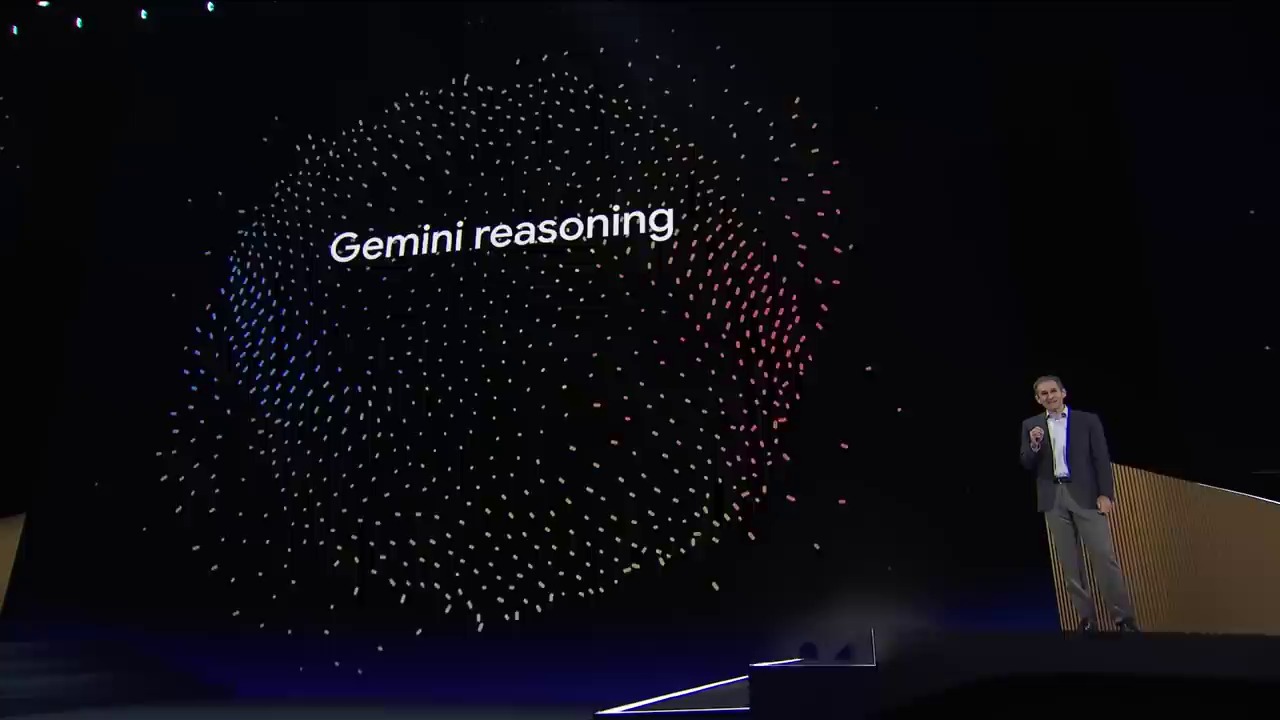
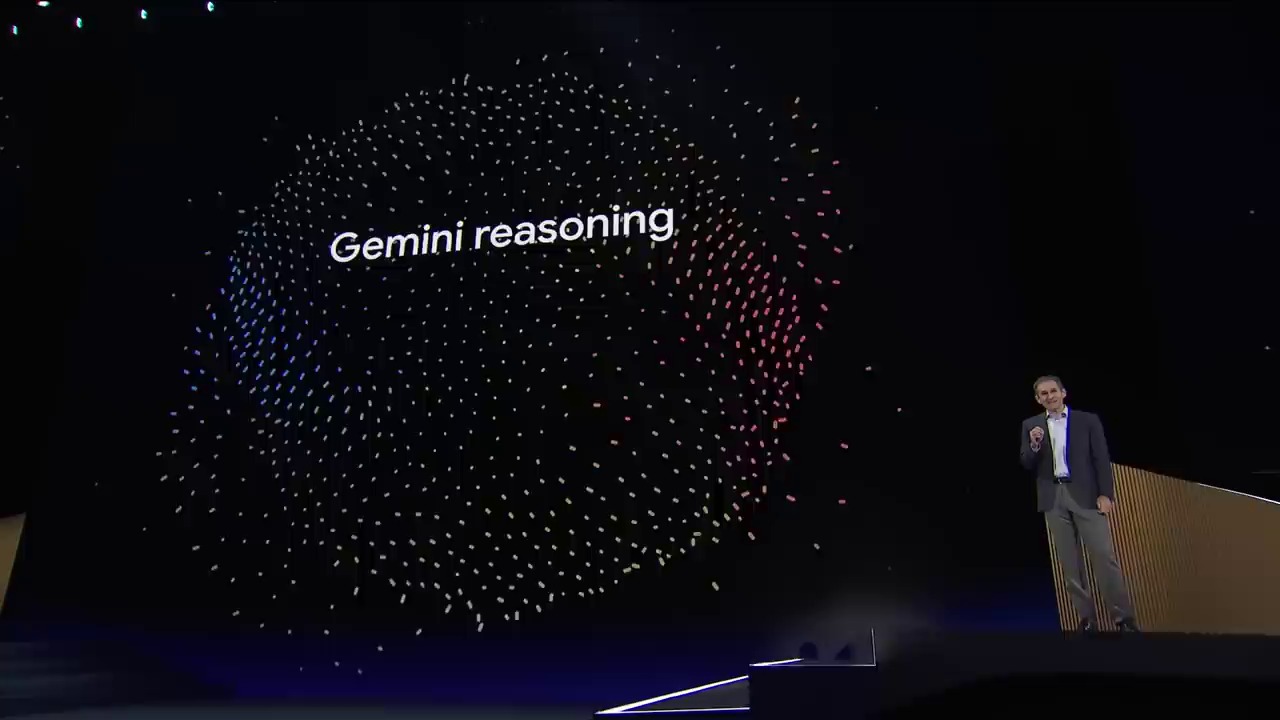
Availability: Public PreviewGemini 3.1 Pro (preview) — State‑of‑the‑art reasoning model optimised for complex workflow orchestration.
Gemini 3.1 Flash Image (Nano Banana 2) — High‑fidelity visual generation model (preview).
Veo 3.1 Lite — Cost‑effective video generation model for high‑volume applications (preview).
Lyria 3 Pro — Enterprise‑grade audio and music generation model (preview).
Anthropic Claude Opus 4.7 — Added support for the latest Claude model.
Agent Studio (low‑code) — Natural‑language UI for building and deploying agents.
Agent Registry & Skills/Tools Registry — Centralised catalogues for discoverability, governance, and reuse of agents and modular skills.
Agent Marketplace — One‑click access to partner‑built agents (Atlassian, Box, Oracle, ServiceNow, Workday, etc.).
Model Context Protocol (MCP) integration — Enables any MCP‑compatible server to be called from agents; all GCP services exposed via MCP.
Agent Identity & Agent Gateway — Cryptographic IDs, zero‑trust verification, and policy enforcement for every agent and orchestration step.
Model Armor — protects models and proprietary data from leakage and other threats.
Observability (OTel‑compliant telemetry) — Fine‑grained tracing, logging, and tool‑use monitoring for agents.
Topics Covered
- State of AI adoption – 75 % of Google Cloud customers now run AI workloads; the shift is from experimentation to production.
- Unified AI stack concept – Chips, models, data, agents, and security must be tightly integrated; Google uses the same “OpenStack” internally for Search, YouTube, Chrome, Android.
- Sundar Pichai’s vision – Massive CAPEX increase (≈ $175‑$185 B) to keep Google at the frontier; AI now powers 75 % of new code, marketing creatives, and security operations.
- Agentic era examples – Internal code‑migration agents (6× faster), marketing asset generation (70 % faster, +20 % conversion), SOC triage (90 % faster mitigation).
- Gemini Enterprise launch – Described as “mission control” for the agentic enterprise; introduces a full‑stack platform (AI Hypercomputer, Agentic Data Cloud, Agentic Defense, Agentic Platform, Agentic Task Force).
- Partnerships & use cases – Apple (future Siri), Citi Sky (AI‑powered wealth advisor), Honeywell (digital‑twin insights), Liverpool (in‑store AI assistant), NASA (Artemis II flight‑readiness).
- Platform architecture – Low‑code Studio, registries, marketplace, MCP, zero‑trust identity, Model Armor, observability, and orchestration capabilities for deterministic, compliant workflows.
- Business impact – A single intelligent flow that links data, people, and goals; enables every employee to become an AI builder while maintaining governance and security.
Key Takeaways
- AI has moved from pilot projects to enterprise‑scale production for the majority of Google Cloud customers.
- Successful AI adoption requires a unified stack where hardware, models, data, agents, and security are co‑designed.
- Gemini Enterprise is Google’s answer—a full‑stack platform that delivers secure, governed, and observable AI agents at scale.
- New Gemini models (3.1 Pro, Flash Image, Veo Lite, Lyria 3) and expanded Anthropic support are now in preview, providing specialized capabilities for reasoning, vision, video, and audio.
- Low‑code tools, registries, and a marketplace make it possible for non‑engineers to create and manage agents, while zero‑trust identity and Model Armor keep the system secure.
- Real‑world deployments (Apple, Citi, Honeywell, Liverpool, NASA) illustrate the breadth of impact—from consumer assistants to mission‑critical space operations.
- Google’s multi‑year CAPEX ramp‑up underscores its commitment to keeping AI infrastructure at the cutting edge for customers.
Notable Quotes
- “The experimenting phase is behind us. And now, the real challenge begins.” – Thomas Kurian
- “We are firmly in the agentic Gemini era.” – Sundar Pichai
- “Intelligence plus automation must deliver value. To make this work, you need context and action.” – Thomas Kurian
- “Our Security Operations Center agents automatically triage tens of thousands of unstructured threat reports each month… reducing threat mitigation time by over 90 %.” – Sundar Pichai
- “Think of it as mission control for the agentic enterprise.” – Thomas Kurian
Podcast Script
JORDAN: Welcome to Episode 8 of SlackCasts by PodSlacker — where AI does the watching so you can do the listening. If you want a richer experience with today's episode, visit PodSlacker dot com slash SlackCasts — you'll find a written summary, key frame moments from the video, and an interactive AI chat to explore the topic as deep as you like. Now let's get into it.
MIKE: Google Cloud Next ’26 just dropped a massive playbook: moving from AI pilots to an enterprise‑wide production paradigm. Sundar Pichai and Thomas Kurian framed it as a capital‑intensive, agent‑centric shift. Let’s unpack what that actually means for us.
JORDAN: The keynote opened with a stark statistic—75 % of Google Cloud customers are already running AI workloads at production scale. That’s not a sandbox anymore; it’s the new baseline. The real question is how we govern that scale without drowning in fragmented tooling.
MIKE: Their answer is the “unified stack” concept: hardware, models, data, agents, and security all co‑designed. Google calls the internal implementation an OpenStack that powers Search, YouTube, Chrome, and Android. If they can pull that off for consumer products, we can expect the same rigor for enterprise workloads.
JORDAN: At the heart of the announcement is the Gemini Enterprise Agent Platform, now in public preview. It’s positioned as “mission control” for the agentic enterprise—a full‑stack environment that binds data, models, and agents under a single governance plane.
MIKE: Let’s break down the stack layers they walked through: the AI Hypercomputer, Agentic Data Cloud, Agentic Defense, Agentic Platform, and Agentic Task Force. Each layer addresses a specific piece of the production puzzle, from raw compute to pre‑built industry agents.
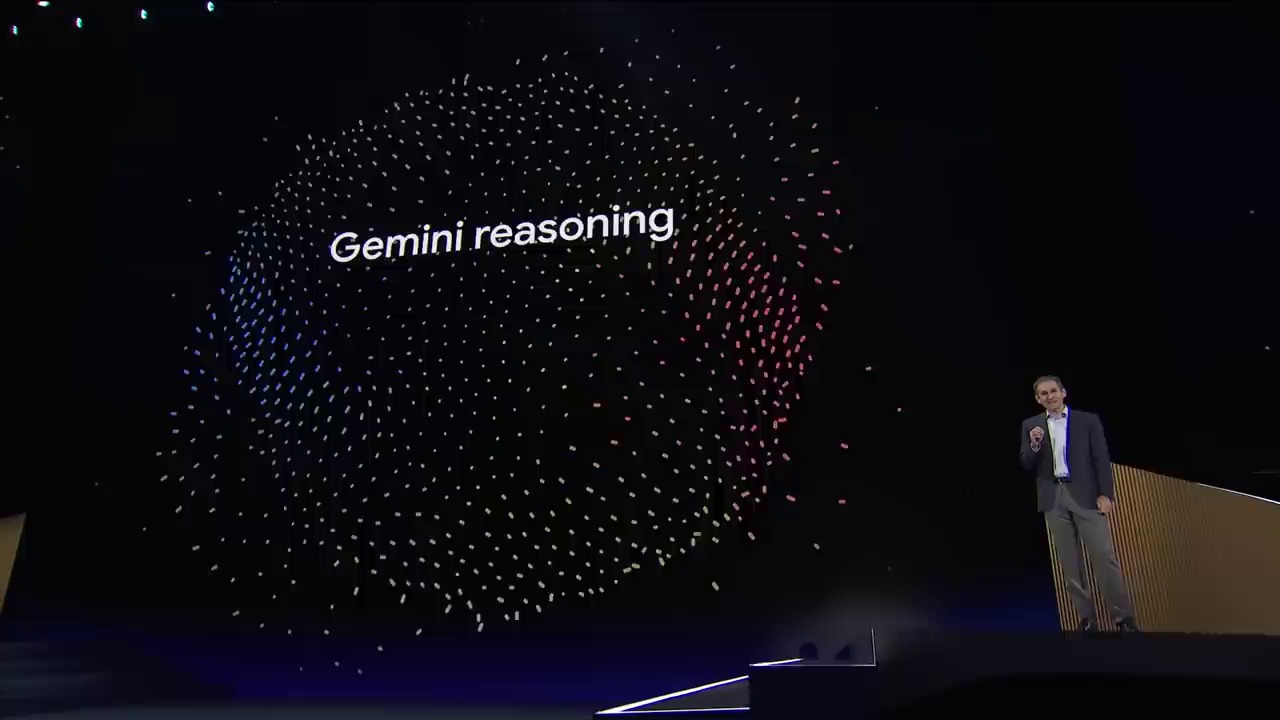
JORDAN: Starting with the AI Hypercomputer, Google unveiled Gemini 3.1 Pro, a reasoning model tuned for complex workflow orchestration. It’s designed to handle multi‑step API calls and deterministic branching with minimal prompt engineering. Early adopters like Databricks and Replit already have it in preview.
MIKE: Parallel to that, they introduced three domain‑specific models: Gemini 3.1 Flash Image (Nano Banana 2) for high‑fidelity visual generation, Veo 3.1 Lite for cost‑effective video synthesis, and Lyria 3 Pro for enterprise‑grade audio and music. All are preview‑only, but they signal Google’s push to cover the entire media stack under Gemini.
JORDAN: They didn’t stop at Google’s own models. Anthropic’s Claude Opus 4.7 is now officially supported, expanding the model palette for customers who prefer multi‑model ensembles or need a safety‑first vendor.
MIKE: The platform’s low‑code surface, Agent Studio, is a natural‑language UI that lets any employee author agents. You write intents in plain English, bind them to business rules, and the system compiles the underlying prompts, tool calls, and policy checks automatically.
JORDAN: Governance is handled through the Agent Registry and the Skills/Tools Registry. Registries act as a centralized catalogue, assigning versioned IDs, metadata, and policy tags to every agent and reusable skill. That’s critical for auditability and reuse across large orgs.
MIKE: And for ecosystem expansion, there’s an Agent Marketplace. Partners like Atlassian, Box, Oracle, ServiceNow, and Workday ship one‑click agents that can be imported directly into Gemini Enterprise. It’s a marketplace model similar to SaaS app stores, but for autonomous agents.
JORDAN: Security gets its own dedicated layer: Agent Identity provides cryptographic IDs and zero‑trust verification for every agent and orchestration step. The Agent Gateway enforces policy centrally, while Model Armor protects model weights and proprietary data from leakage.
MIKE: Observability is baked in with OpenTelemetry‑compliant telemetry. You get fine‑grained traces, tool‑use logs, and reason‑loop diagnostics out of the box, which is indispensable for troubleshooting deterministic agent pipelines.
JORDAN: The Model Context Protocol (MCP) integration is another first. Any MCP‑compatible server can be called from an agent, and Google has exposed all GCP services via MCP. That means you can orchestrate BigQuery, Vertex AI, Cloud Storage, or even private on‑prem services without custom adapters.
MIKE: They also highlighted agent‑to‑agent orchestration. Agents can delegate tasks, forming hierarchical workflows. This enables deterministic compliance paths—critical for regulated industries where you need to guarantee a specific execution sequence.
JORDAN: Real‑world use cases were sprinkled throughout. Internally, Google engineers used a trio of planner, orchestrator, and coder agents to complete a code migration six times faster than a year ago. Marketing assets for Gemini and Chrome were generated at 70 % faster turnaround with a 20 % uplift in conversion.
MIKE: Security Operations Center agents now triage tens of thousands of unstructured threat reports each month, slashing mitigation time by over 90 %. Those internal metrics set a high bar for what customers can expect when they adopt the platform.
JORDAN: On the partnership front, Google announced Apple as a preferred cloud partner to develop next‑generation Apple Intelligence models, essentially a joint Gemini‑based foundation for Siri. That gives us a glimpse of how consumer‑grade agents will trickle down to enterprise tools.
MIKE: Citi Sky, the AI‑powered wealth advisor built with Gemini Enterprise, showcases multilingual, always‑on client interactions. Honeywell leverages digital twins trained on billions of product specs, while Liverpool’s in‑store assistant promises a ten‑fold ROI. Even NASA is using Gemini agents for Artemis II flight readiness, illustrating the platform’s mission‑critical credibility.
JORDAN: All of this is underpinned by a staggering CAPEX ramp—Google is moving from $31 B in 2022 to $175‑$185 B in the next four years, with more than half of ML compute earmarked for the cloud business by 2026. That level of investment ensures the hardware, networking, and TPU fabric can keep pace with the agentic demand.
MIKE: From a strategic lens, the “agentic era” framing shifts the focus from isolated AI models to orchestrated workflows that deliver context‑aware action. It forces enterprises to think about data pipelines, policy enforcement, and observability as first‑class citizens, not afterthoughts.
JORDAN: The key differentiator for Gemini Enterprise is that it abstracts the complexity of building, securing, and monitoring agents while still exposing the low‑level knobs for power users. You can stay in a no‑code environment or dive into custom tool definitions if you need to.
MIKE: For senior practitioners, the biggest takeaways are: adopt a unified stack to avoid siloed AI, leverage the low‑code Agent Studio to democratize agent creation, and bake zero‑trust identity and Model Armor into every step to meet compliance.
JORDAN: Also, start inventorying your reusable business logic as “skills” and publish them to the Skills Registry. That will pay dividends when you scale agent‑to‑agent orchestration across departments.
MIKE: And don’t overlook the observability stack. OTel‑compatible traces let you root‑cause performance regressions in real time—a capability that’s non‑negotiable when agents are making autonomous decisions that affect revenue or safety.
JORDAN: In summary, Google’s Gemini Enterprise Agent Platform moves AI from experimental pilots to production‑grade, governed, and observable agentic workflows. The preview includes a family of specialized Gemini models, a low‑code studio, robust security primitives, and an ecosystem marketplace.
MIKE: If we can harness that stack, we’ll transform every knowledge worker into a potential AI builder, while keeping the enterprise canopy of governance intact. That’s the promise of the agentic era—scalable intelligence with purposeful action.
JORDAN: That’s a wrap on today's SlackCast. Head over to PodSlacker dot com slash SlackCasts for the written summary, visual key moments, and an AI chat to dive even deeper into today's topic. Until next time — slack off smarter.