
Key Moments
Summary & Script
Developer Keynote (Google I/O '26)
Source: https://www.youtube.com/watch?v=aqmpZocmR8o
Video ID: aqmpZocmR8o
Overview
In this keynote, Google announced a suite of new tools that push AI from simple assistance toward fully‑featured, autonomous agents. Building on recent model releases—Gemini 3.5, Gemini Spark and the open‑source Gemma 4—Google introduced Google Antigravity, an agent‑centric development platform, and Managed Agents that pair a Gemini model with a secure, Google‑hosted Linux sandbox. The session showcased end‑to‑end demos: creating an AI‑driven talk‑radio show, deploying it as a web app on Cloud Run, generating an Android app, and exporting the full project to a local Antigravity SDK. New capabilities such as dynamic sub‑agents, scheduled tasks, and deep integrations with Workspace, Firebase, and Firestore were also revealed.
New Features & Announcements
Managed Agents (Gemini API) – One‑call creation of an agent plus isolated Linux execution environment, eliminating infrastructure setup.
Timeline: Available today
Availability: Public PreviewGoogle AI Studio Enhancements – Built‑in support for running, testing, and deploying agent‑based apps to Cloud Run, Android, and soon the Play Store; instant “no‑credit‑card” Cloud Run URLs for new users.
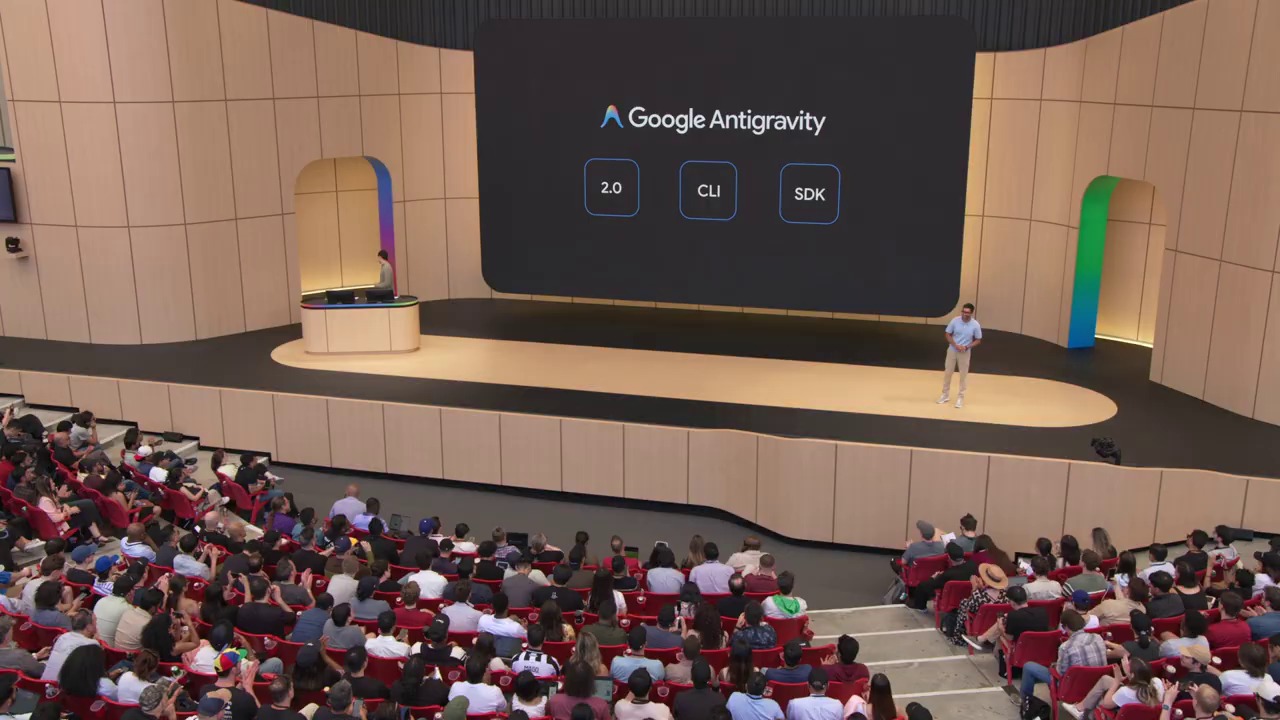
Antigravity SDK & Antigravity 2.0 Desktop App – Full‑stack agent harness optimized for Gemini, with one‑click export from AI Studio to local development, dynamic sub‑agents, and cron‑style scheduled tasks.
Timeline: Available today (SDK), 2.0 desktop rolling out soonWorkspace Integration – Agents can now directly interact with Google Docs, Gmail, Calendar, etc., via natural‑language prompts.
Firebase & Firestore Support – Coding agents now include back‑end database and OAuth capabilities out of the box.
Topics Covered
- Model Landscape Recap – Gemini 3.5 series, Gemini Spark, and Gemma 4 (Apache 2.0, 100 M+ downloads, runs on phones, robots, satellites).
- Agent‑Centric Paradigm Shift – Moving from “assistants” to agents that autonomously achieve user‑defined goals.
- Antigravity Platform Overview – Core Antigravity agent, managed agents, and developer tooling stack.
- Managed Agents Demo – Stitch’s design‑system importer; external early‑access partners (Ramp, Resemble AI, Klipy).
- AI Studio Playground – Custom Markdown‑defined agents, AI Talk Radio example showing research, script, TTS, music generation, and audio mixing without manual orchestration.
- From Prototype to Production – Paige Bailey built a radio‑show app, deployed to Cloud Run in minutes, then generated a native Android app (Kotlin) and previewed it in‑studio.
- Workspace, Firebase & Firestore Integration – Seamless prompting to connect Docs, Gmail, Calendar, and database services.
- Antigravity 2.0 Features – Multi‑agent workspaces, dynamic sub‑agents, scheduled tasks (cron), and IDE‑agnostic workflow.
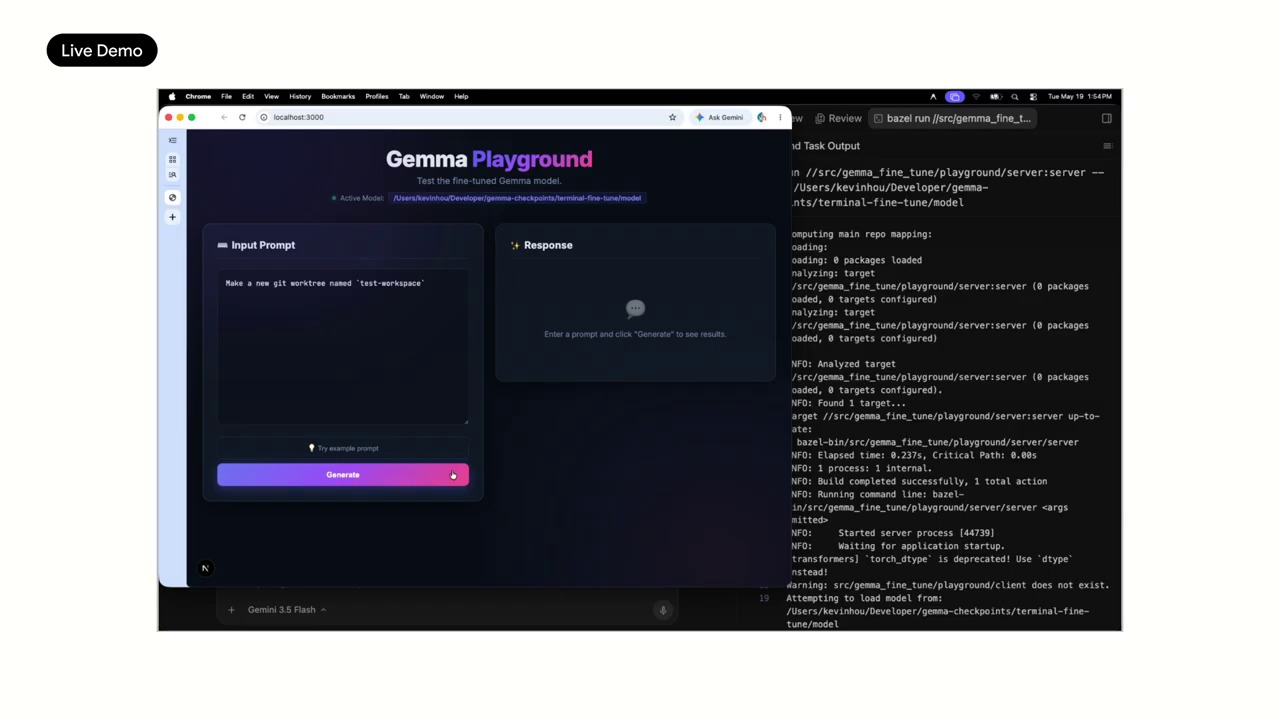
- Fine‑tuning Gemma 4 – Demonstrated how Antigravity simplifies model fine‑tuning without complex pipelines.
Key Takeaways
- Agents are now a first‑class developer construct—Google provides both hosted (Managed Agents) and self‑hosted (Antigravity SDK) options.
- Infrastructure friction is removed: a single API call provisions an isolated sandbox for any agent.
- End‑to‑end development is streamlined through AI Studio, which handles prototyping, deployment to Cloud Run, Android build, and future Play Store publishing.
- Markdown‑driven agent definitions lower the barrier to creating complex, multi‑tool workflows.
- Dynamic sub‑agents and scheduled tasks give agents the ability to scale horizontally and operate autonomously.
- Deep integration with Google’s ecosystem (Workspace, Firebase, Firestore) enables agents to manipulate real‑world productivity and data services directly.
- Open‑source Gemma 4 democratizes powerful on‑device AI, and Antigravity makes fine‑tuning it accessible to non‑ML engineers.
Notable Quotes
- “The hottest new programming language is Markdown, and I’m here for it.” – Logan Kilpatrick
- “Managed agents are available starting today… you can start building with your preferred stack from day one.” – Logan Kilpatrick
- “We’re making it easier to build with agents, not just build agents.” – Anshul Ramachandran
- “If you can go from writing 200 lines of code a day to 2,000 with an AI agent, are you actually a better engineer, or are you just vibing?” – Paige Bailey (playback)
Podcast Script
JORDAN: Welcome to Episode 13 of SlackCasts by PodSlacker — where AI does the watching so you can do the listening. If you want a richer experience with today's episode, visit PodSlacker dot com slash SlackCasts — you'll find a written summary, key frame moments from the video, and an interactive AI chat to explore the topic as deep as you like. Now let's get into it.
MIKE: This week Google dropped a bombshell: a full‑stack agent platform that pushes Gemini from a clever assistant into a production‑grade autonomous worker. Let’s unpack what that actually means for us building at scale.
JORDAN: First, the model landscape. They've rolled out Gemini 3.5, Gemini Spark for multimodal reasoning, and the open‑source Gemma 4 under Apache 2.0. Gemma 4 can run on a phone, a robot, even a satellite, and it's already hit over half a billion downloads.
MIKE: The key strategic shift is the “agent‑centric” paradigm. Instead of prompting a model to answer a question, you give it a goal and let it orchestrate tools, sub‑tasks, and even spin up its own sandbox. That’s the premise behind Antigravity.
JORDAN: Antigravity is the harness that wraps Gemini with execution semantics. At its core is the Antigravity agent, which interprets a Markdown‑defined skill set, resolves dependencies, and talks to the Linux sandbox that Google provisions for you.
MIKE: And that sandbox is the Managed Agents service. One API call returns both the agent definition and a secure, isolated Linux environment. No need to spin up VMs, configure Docker, or manage IAM policies. It’s public preview today.
JORDAN: Exactly. The Managed Agents demo showed Stitch’s design‑system importer: the agent clones a GitHub repo, parses the component hierarchy, and spits out a design.md file. All the heavy lifting happens inside Google‑hosted Linux, scaling to millions of users without the developer worrying about quotas or chroot security.
MIKE: Early‑access partners like Ramp, Resemble AI, and Klipy are already using it, which hints at a broad ecosystem: fintech compliance checks, synthetic voice pipelines, and video clipping—all powered by the same one‑call agent provision.
JORDAN: The AI Studio Playground now lets you instantiate these agents with a single click. The “AI Talk Radio” template is a perfect showcase: you define skills for research, scriptwriting, TTS, music generation via Lyria, and audio mixing, all in Markdown, and the platform stitches the workflow together automatically.
MIKE: What’s impressive is the end‑to‑end flow they demonstrated. Logan triggers the agent, it pulls the latest Hacker News stories, builds a script, generates multi‑speaker audio, creates cover art with Nano Banana, and drops a ready‑to‑stream MP3 into the sandbox—all without any orchestration code you write.
JORDAN: Then Paige Bailey took that prototype and turned it into a real‑world app. She called the managed agent from AI Studio, got back the MP3 and metadata, and within minutes deployed the web front‑end to Cloud Run. AI Studio even auto‑generates a project, handles the GCP billing project, and gives you a live URL—no credit card required for new users.
MIKE: The deployment story matters because it removes the “prototype‑to‑production” gap. Yesterday you’d have to containerize your code, write a Dockerfile, push to Artifact Registry, then configure Cloud Run manually. Now it’s a two‑click operation inside the same UI.
JORDAN: And they didn’t stop at web. With a single prompt, AI Studio generated a native Android app in Kotlin, built it in the cloud, and streamed the APK back for you to sideload. The emulator preview is embedded, and the next step—publishing to the Play Store—is already wired into the UI.
MIKE: That brings us to the Workspace integration. Agents can now be instructed to “draft a proposal in Docs,” “send follow‑up emails,” or “schedule a meeting” by simply describing the intent in natural language. Under the hood they call the Workspace APIs, handling OAuth scopes automatically.
JORDAN: Firebase and Firestore support is baked into the coding agent as well. You can add a Firestore collection, define security rules, and the agent will provision the backend, generate client SDK calls, and even wire up OAuth flows—all without you writing any server code.
MIKE: All of this is powered by the Antigravity SDK and the upcoming Antigravity 2.0 desktop app. The SDK lets you export a full project—including file system, context, and agent state—from AI Studio to a local development environment with a single click. No more copy‑paste of snippets.
JORDAN: Antigravity 2.0 extends that with multi‑agent workspaces, dynamic sub‑agents, and cron‑style scheduled tasks. Sub‑agents let your main agent delegate a QA sub‑agent or a data‑science helper, parallelizing work and preventing bottlenecks.
MIKE: Scheduled tasks are a game‑changer for ops. Imagine an agent that pulls PR summaries every morning, or monitors cloud health every hour, and escalates tickets automatically. It’s essentially “infrastructure as code” for autonomous workflows.
JORDAN: Kevin Hou demonstrated fine‑tuning Gemma 4 using Antigravity. Previously you’d need a Kubeflow pipeline, data versioning, and a GPU cluster. With Antigravity, you define a dataset and hyperparameters in Markdown, hit “train,” and the platform handles the distributed training, checkpointing, and model registration.
MIKE: That lowers the barrier for product teams to adapt LLMs to domain‑specific vocabularies without hiring a full ML ops squad. Open‑source Gemma 4 plus Antigravity means you can keep data on‑prem while still leveraging Google’s managed execution sandboxes.
JORDAN: Summarizing the takeaways: agents are now a first‑class construct via Managed Agents and the Antigravity SDK; infrastructure friction is gone with single‑call sandbox provisioning; AI Studio gives you rapid prototyping, Cloud Run deployment, and Android builds; Markdown‑driven definitions democratize complex orchestration; and dynamic sub‑agents plus scheduled tasks push agents toward true autonomy.
MIKE: From a product strategy lens, that means we can ship AI‑driven features—personalized news feeds, automated report generation, compliance bots—without building custom pipelines. The real value becomes the prompts and the business logic you encode, not the plumbing.
JORDAN: And the ecosystem angle is huge. Integration points with Workspace, Firebase, Firestore, and the soon‑to‑come Play Store publishing create a closed loop where an agent can conceive, build, deploy, and maintain a product entirely within Google Cloud.
MIKE: For teams already on GCP, the path forward is clear: start with Managed Agents for quick validation, then graduate to Antigravity locally when you need tighter CI/CD control or custom hardware. The public preview makes it low‑risk to experiment today.
JORDAN: One final nerd‑snack: Logan declared “the hottest new programming language is Markdown.” I’ll add that the next generation of LLM‑orchestrated development will likely be a hybrid of Markdown + declarative YAML for tooling, with the model interpreting the intent.
MIKE: And Paige’s quip—going from 200 to 2,000 lines of code with an agent—raises the age‑old question: are we amplifying engineering productivity or just shifting effort to prompt engineering? Either way, the ROI looks compelling when you factor in time‑to‑value.
JORDAN: That’s a wrap on today's SlackCast. Head over to PodSlacker dot com slash SlackCasts for the written summary, visual key moments, and an AI chat to dive even deeper into today's topic. Until next time — slack off smarter.