
Key Moments
Summary & Script
Goin Down South (RL Burnside, Black Keys) Guitar Lesson with tabs
Source: https://www.youtube.com/watch?v=wAAPcsR0waU
Video ID: wAAPcsR0waU
Overview
In this lesson the instructor breaks down the hill‑country blues tune “Goin’ Down South” (made famous by R.L. Burnside and covered by The Black Keys). He explains the style’s riff‑based, groove‑focused nature, then teaches the main eight‑bar riff in two parts and demonstrates two different right‑hand techniques for playing it. The video ends with a slow metronome play‑through of both approaches so viewers can practice along.
Topics Covered
- Hill‑Country vs. Delta Blues – Emphasis on repetitive riffs and minimal chord changes, making it ideal for hand‑exercise and groove practice.
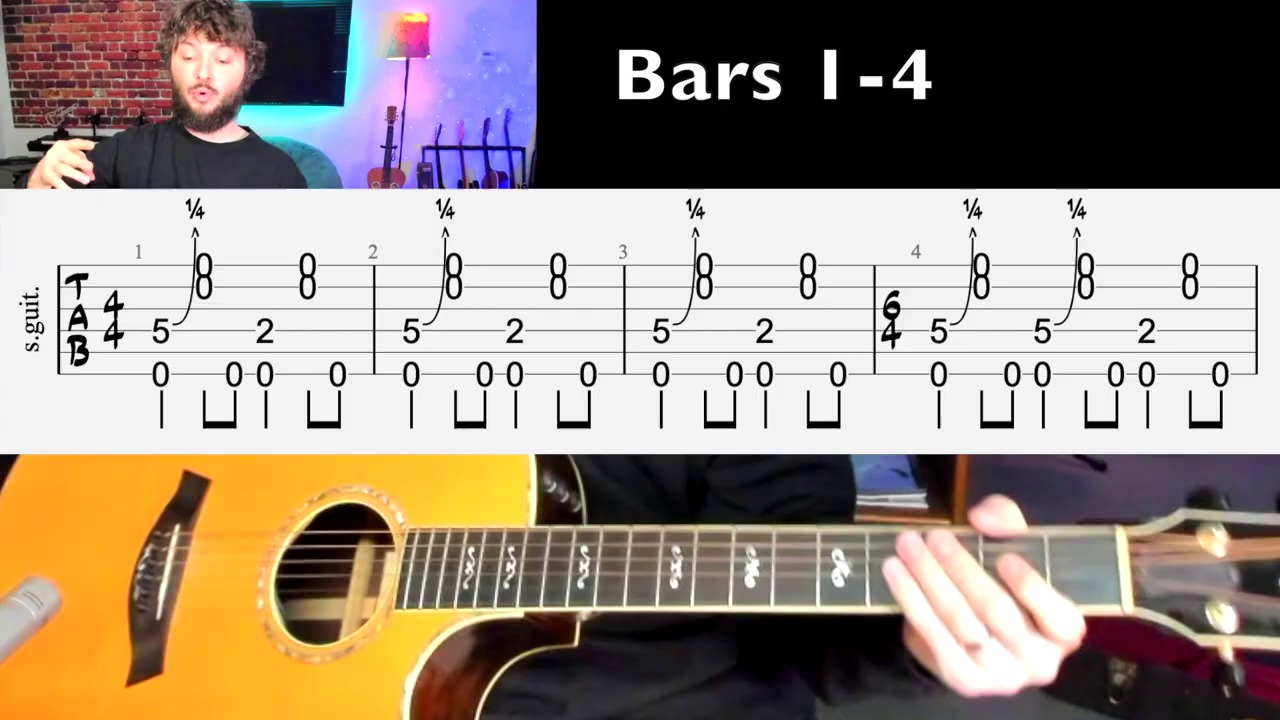
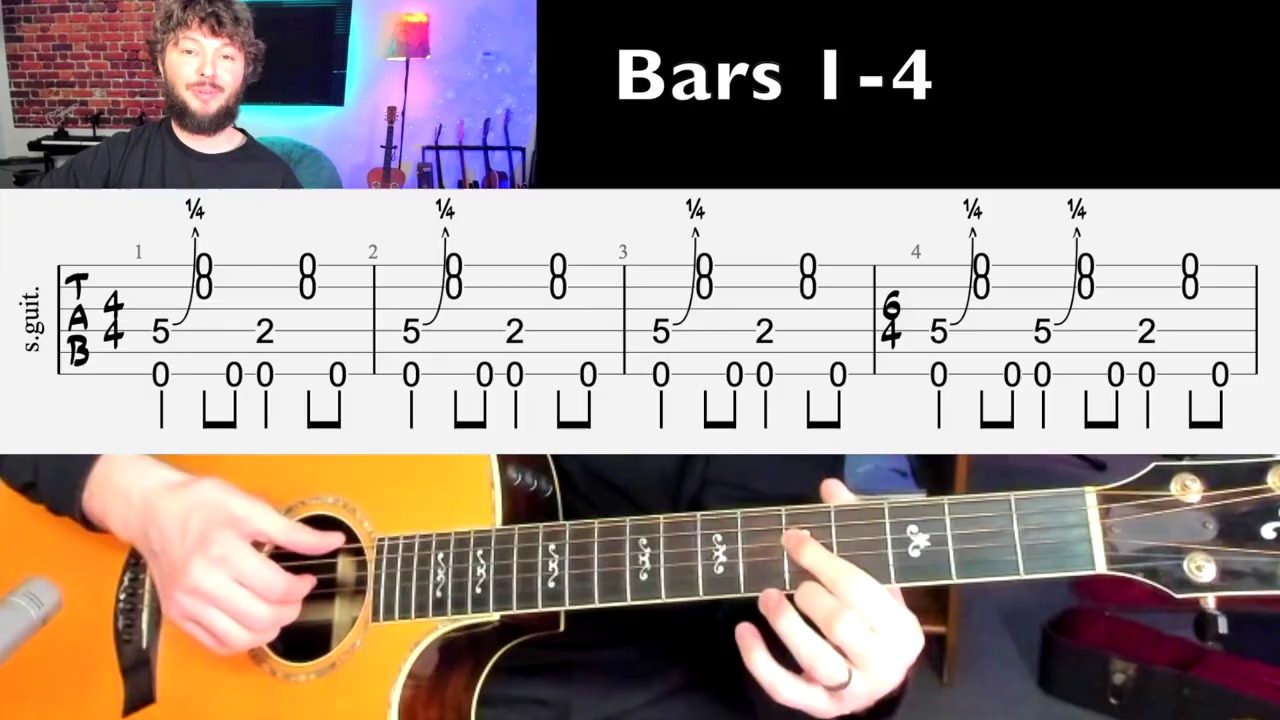
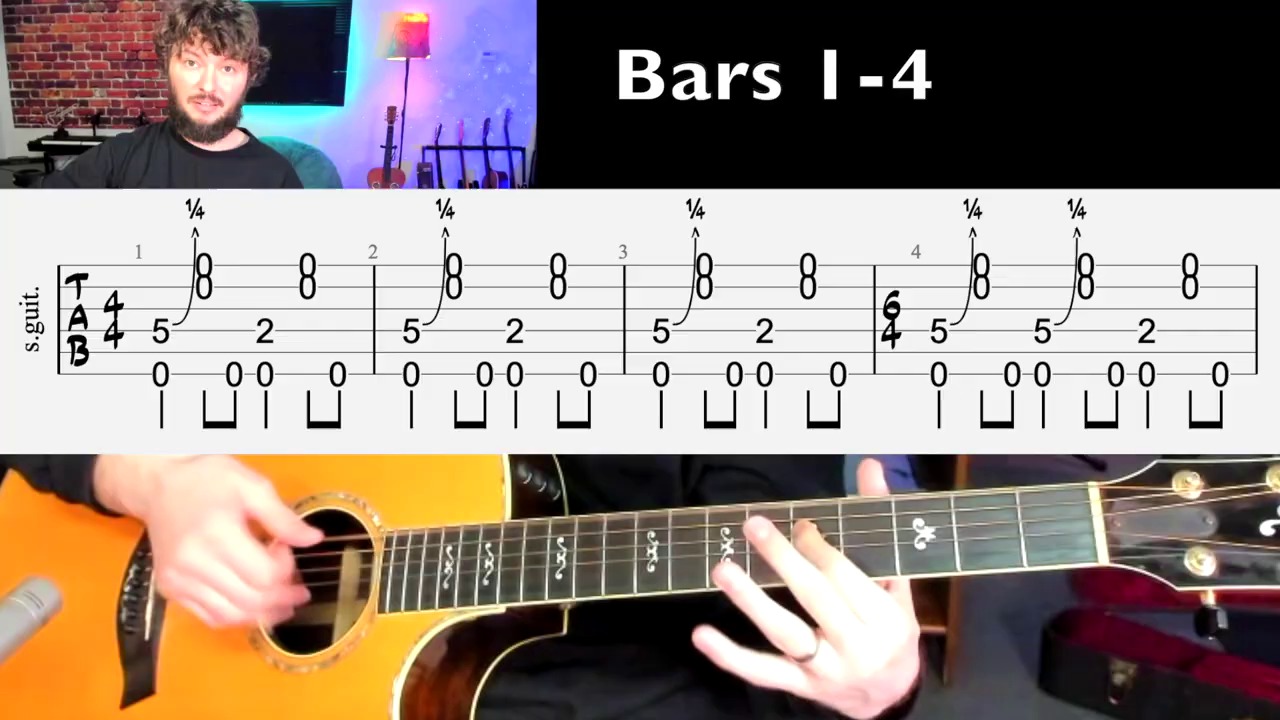
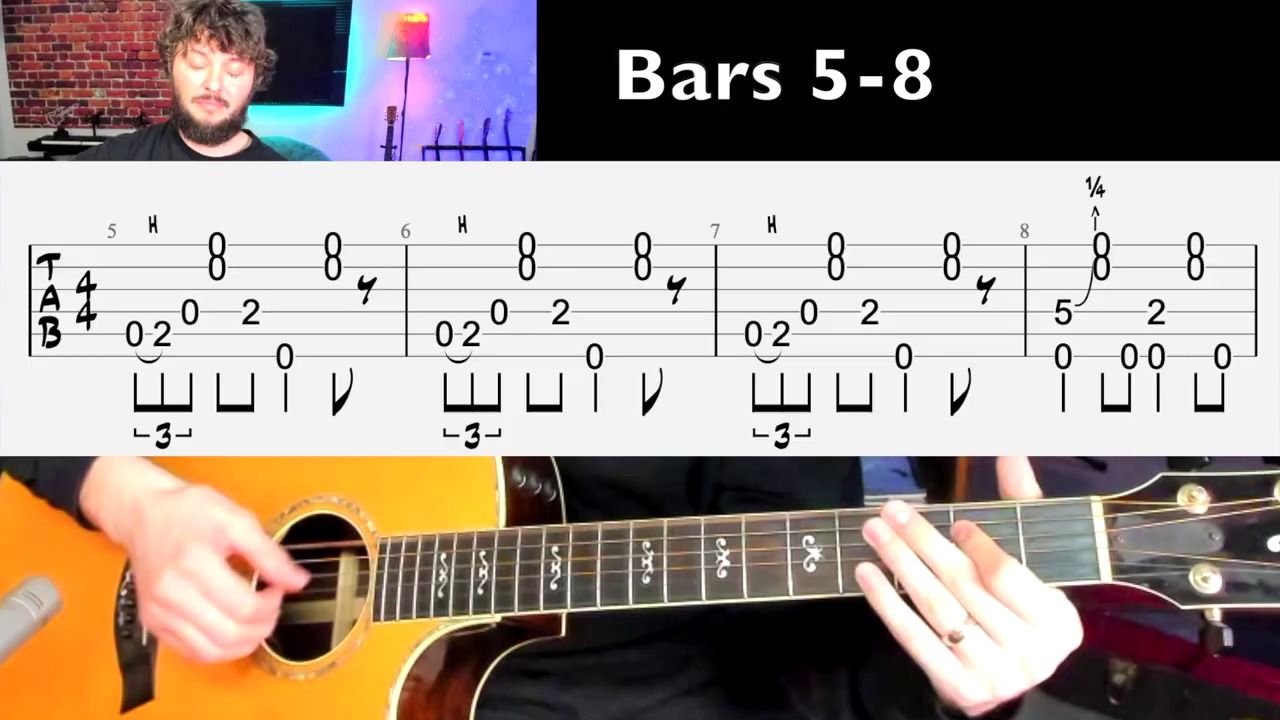
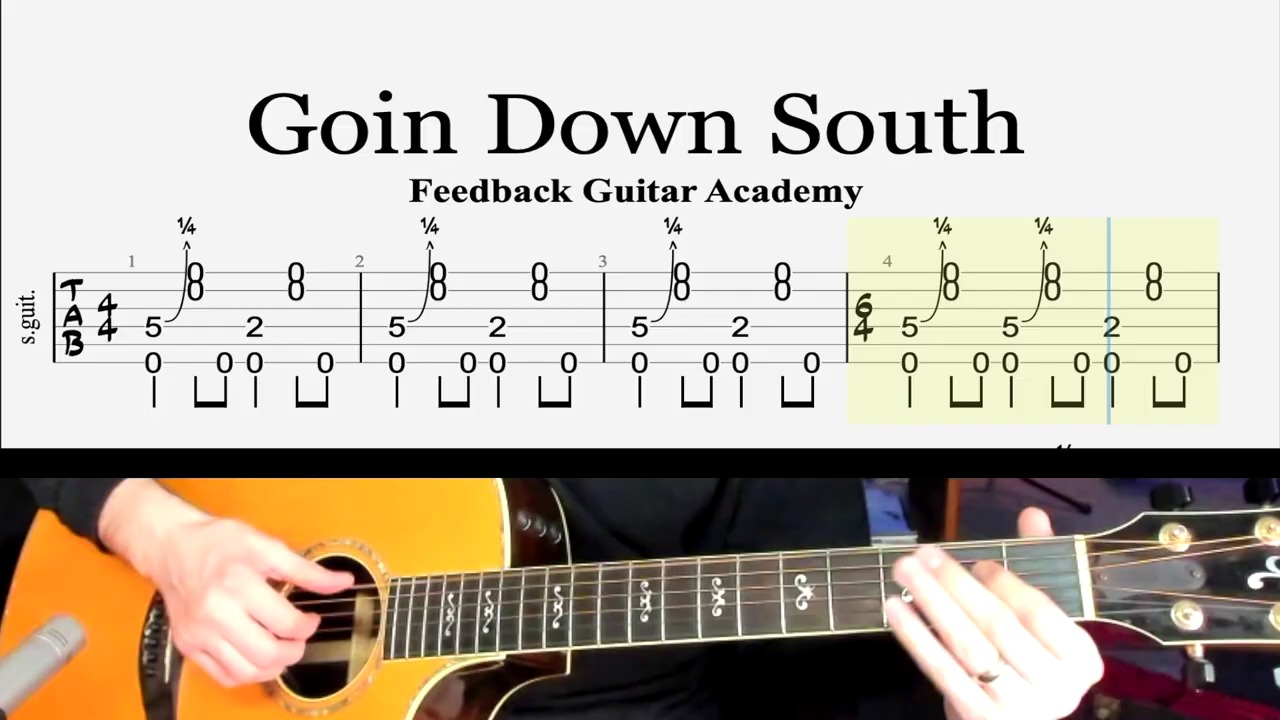
- Structure of the Riff – First four bars (8‑beat pattern: three bars of 4 beats, fourth bar of 6 beats) and the second four‑bar variation that repeats three times before returning to the first riff.
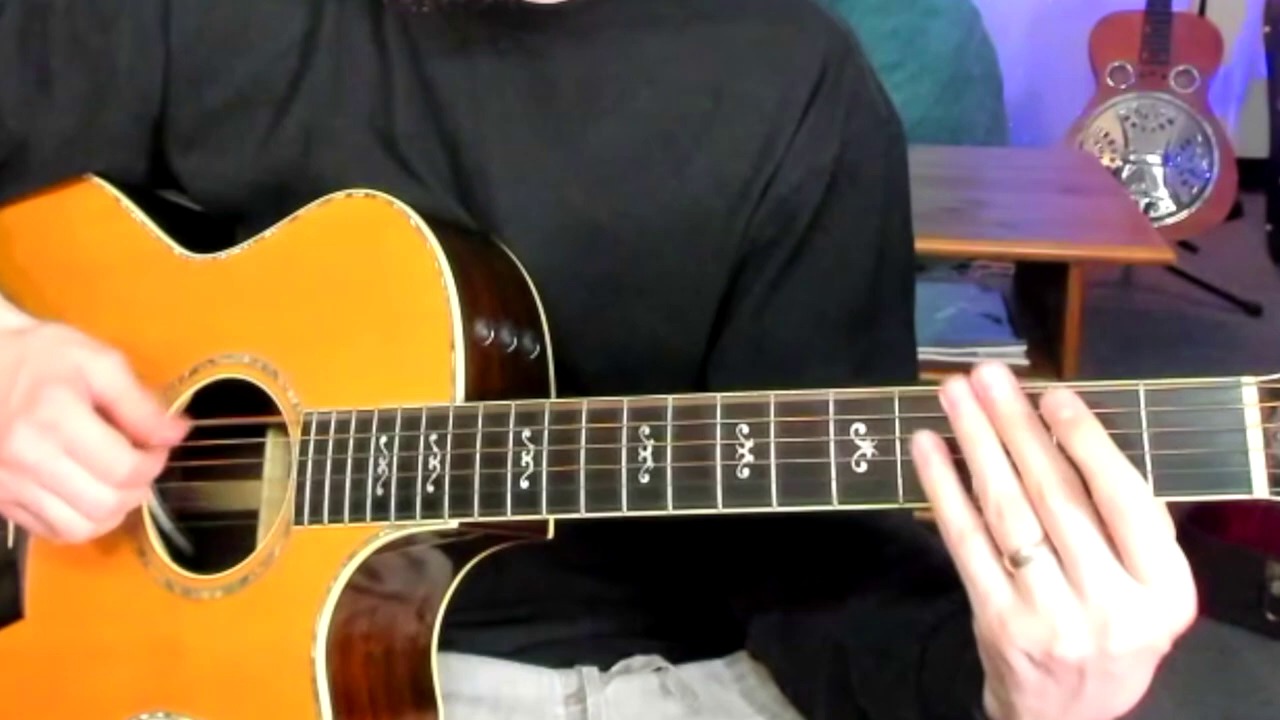
- Detailed Fingerings – Uses thumb + index on low E and D strings, with “pop” of the high E and B strings; includes a tiny quarter‑step bend on the D‑string fifth fret.
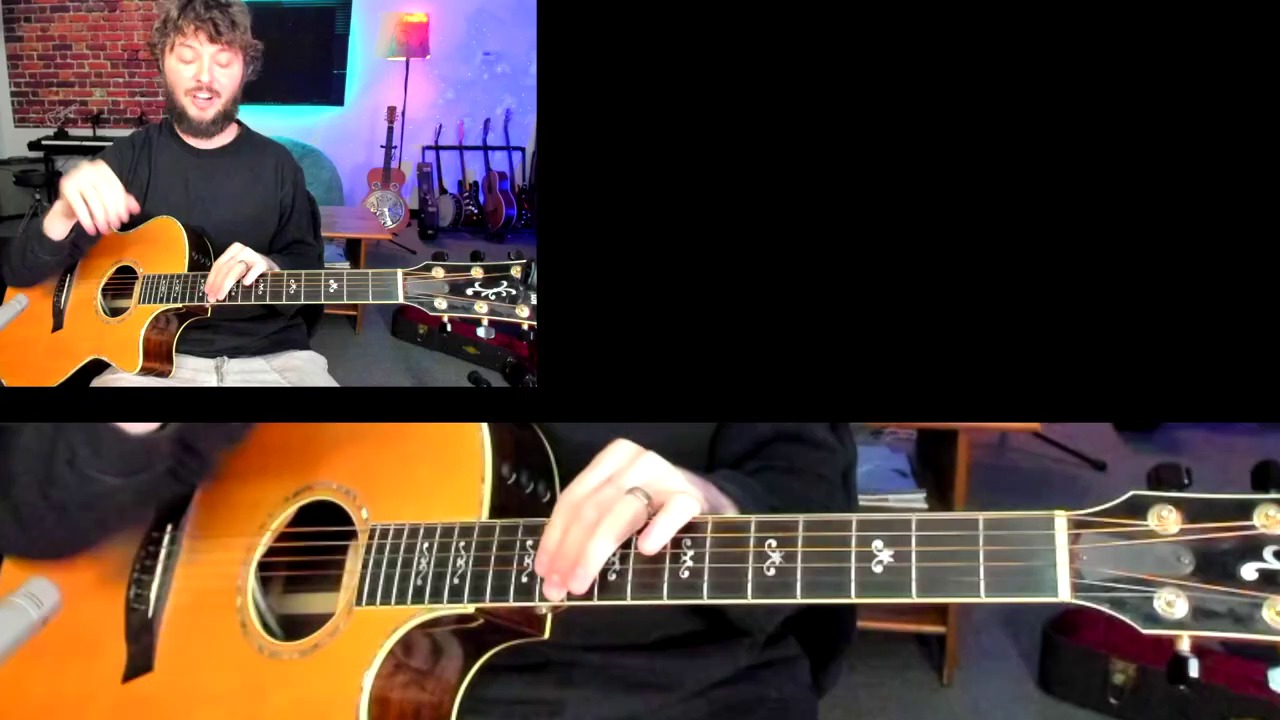
- Right‑Hand Approach #1 (Standard Pop) – Separate fingers pop the top strings; keep the pops short and mute them with the left hand for a crisp sound.
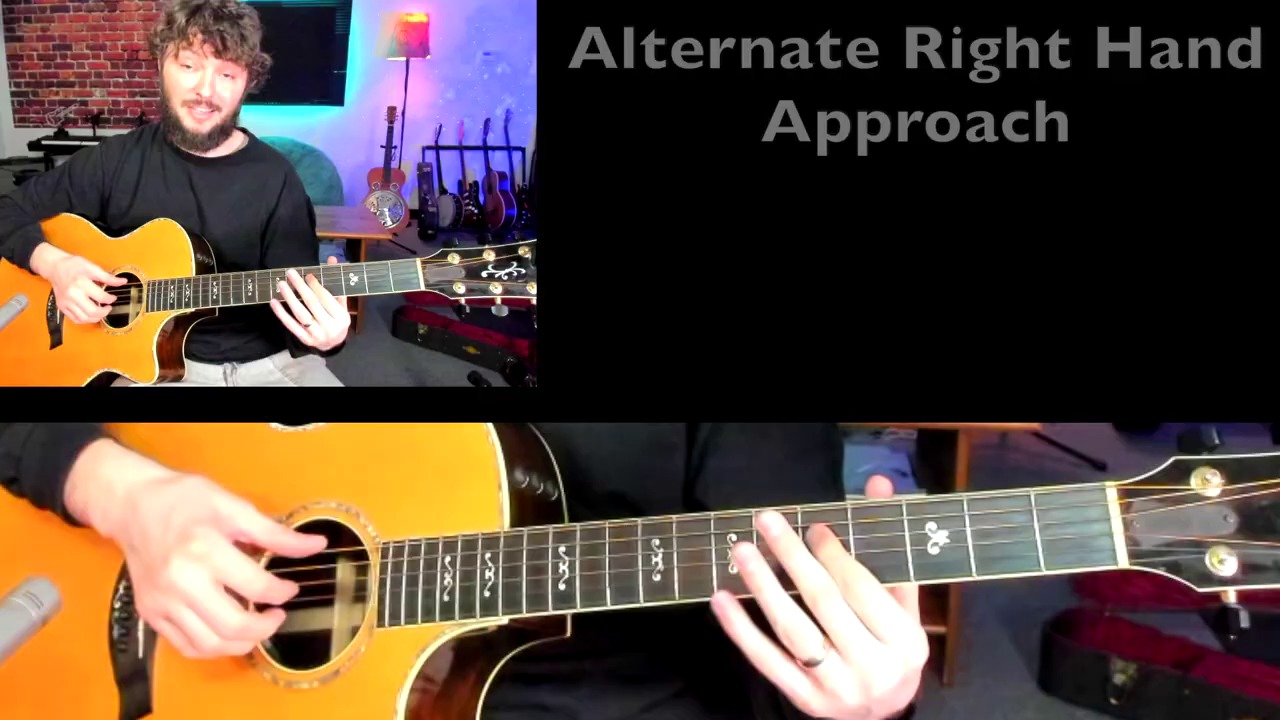
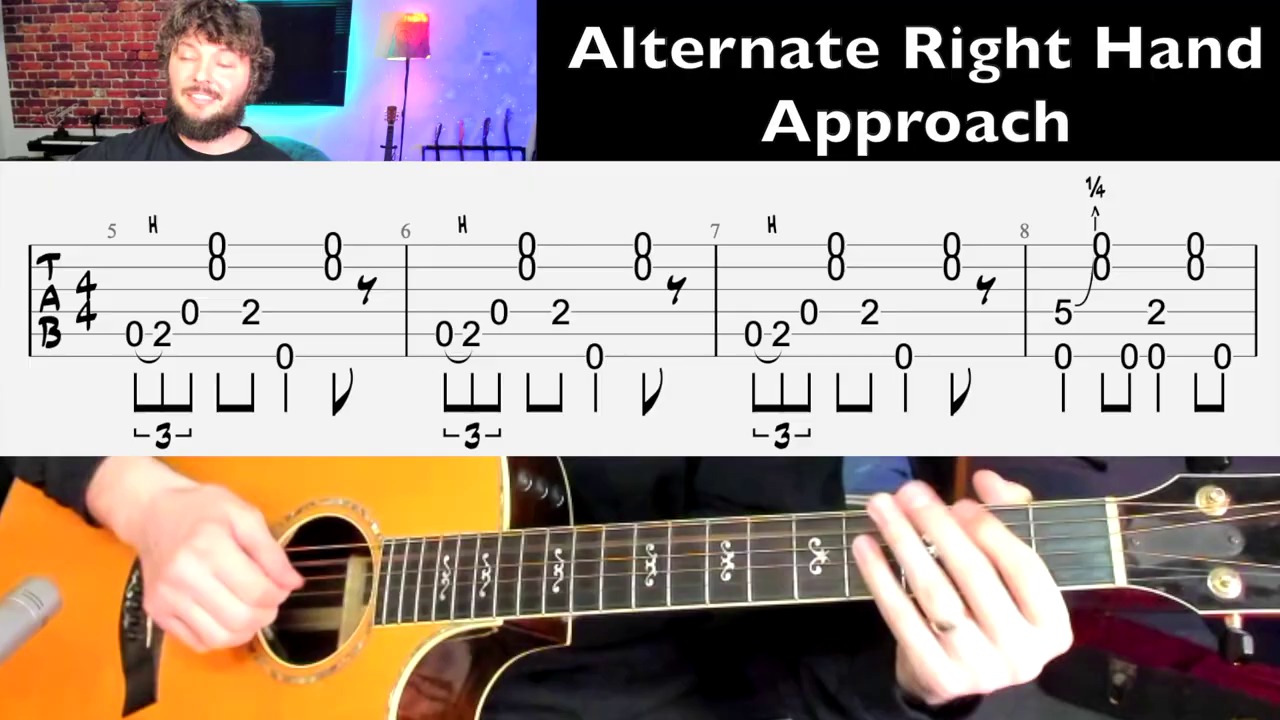
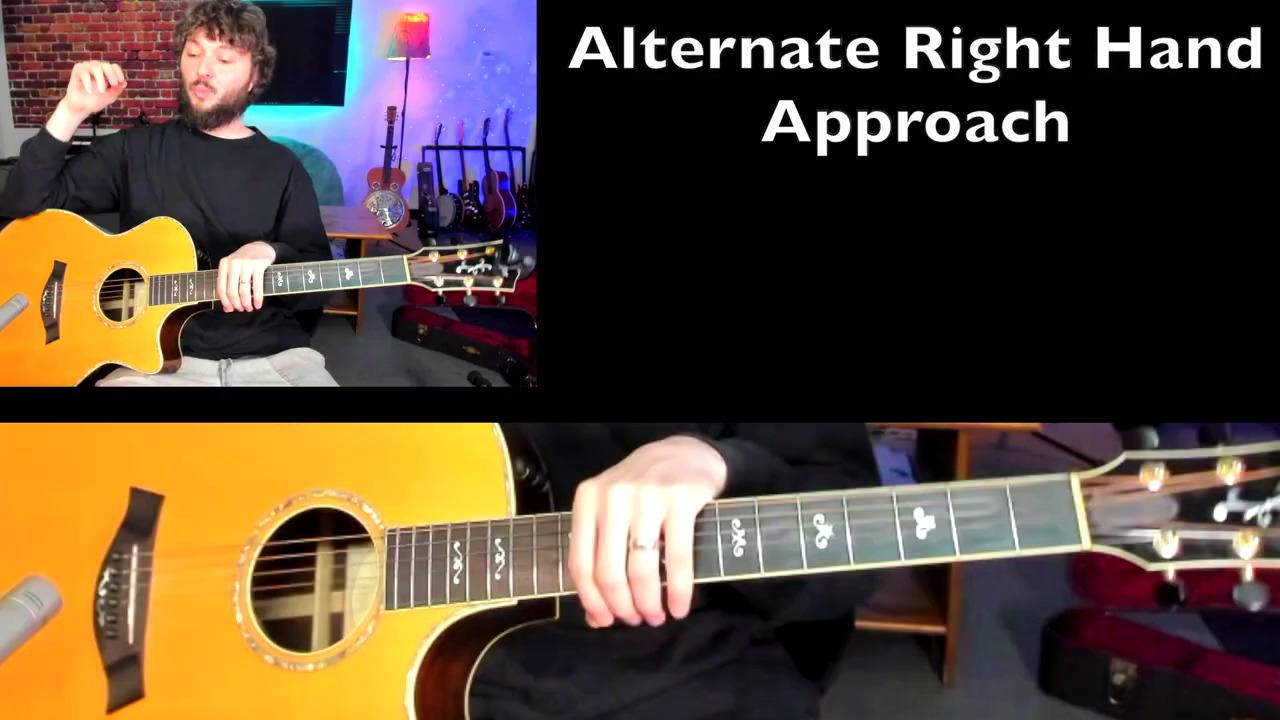
- Right‑Hand Approach #2 (Backhand Strum + Slap) – A rotational “backhand” strum hits the top two strings while the thumb slaps the low string, adding percussive groove.
- Practice Tips – Start with the standard pop technique, then add the backhand strum; focus on wrist rotation rather than arm movement; keep the slap light.
- Full Play‑Through – Slow metronome run‑through of all eight bars in both styles for audience to jam along.
Key Takeaways
- Hill‑country blues relies on short, looping riffs rather than chord changes, perfect for developing right‑hand groove.
- The main riff consists of a repeating 4‑beat pattern with a 6‑beat fourth measure; mastering this loop covers most of the song.
- Small bends and muted “pops” give the riff its characteristic blues feel.
- Two viable right‑hand techniques: traditional two‑finger pop and a backhand strum/slap combo; the latter adds extra percussive texture.
- Practice slowly with a metronome, first mastering finger placement, then integrating the backhand motion.
- Wrist rotation (like turning a key) is the key motion for the backhand strum—don’t rely on arm movement.
Notable Quotes
- “Hill country blues is really more riff‑based or groove‑based – they won’t change the chords as much.”
- “The tiny quarter‑step bend is just to give it that blues bend, not a full bend.”
- “When you add the backhand strum you get a little more rhythm, a little more groove – that’s the whole concept for hill‑country style.”
- “Your wrist stays put; it’s a rotational motion, like opening a key at a lock—not an arm swing.”
Podcast Script
JORDAN: Welcome to Episode 14 of SlackCasts by PodSlacker — where AI does the watching so you can do the listening. If you want a richer experience with today's episode, visit PodSlacker dot com slash SlackCasts — you'll find a written summary, key frame moments from the video, and an interactive AI chat to explore the topic as deep as you like. Now let's get into it.
MIKE: Today we're dissecting “Goin’ Down South,” the hill‑country blues classic that R.L. Burnside turned into a riff‑monster, later reimagined by The Black Keys. Let’s start with the big picture: why hill‑country feels so different from Delta blues.
JORDAN: Hill‑country leans on repetitive, groove‑centric riffs rather than the chord‑changing progressions you hear in Delta. The harmony stays static—usually a single chord or tonal center—so the right hand becomes the primary rhythmic engine.
MIKE: That static harmony makes it a perfect laboratory for hand‑exercise, especially for developing a tight, percussive feel. It also explains why players can loop the same eight‑bar pattern for minutes without losing momentum.
JORDAN: Speaking of the eight‑bar loop, the first half of the riff occupies four bars. The first three bars are a straight 4‑beat pattern, then the fourth bar stretches to six beats, effectively adding two extra eighth‑notes. That asymmetry creates the “push” that drives the groove.
MIKE: And that push is where the subtle quarter‑step bend on the D‑string fifth fret comes in, right? Not a full bend, just enough to inject that bluesy microtonal flavor.
JORDAN: Exactly. The fingerings are thumb + index on the low E and D strings, while the high E and B strings are popped. The thumb anchors the low notes, the index handles the D‑string bend, and the two‑finger pop adds a crisp, muted snap.
MIKE: Let’s break down the right‑hand technique #1, the “standard pop.” You use separate fingers to pop the high strings, then immediately mute them with the left hand. That short, staccato articulation is crucial for that clipped tone.
JORDAN: The instructor emphasizes left‑hand muting right after the pop. If you let the strings ring, you lose the percussive bite. Beginners often hear a “wah‑wah” sound until they practice the left‑hand kill.
MIKE: How does the timing line up? We’re looking at a pattern of 1‑2‑3‑4, then 5‑6 on the extended bar, correct?
JORDAN: Right. Count “1‑2‑3‑4, 5‑6” on the fourth bar. The thumb stays on beats 1‑4, and the pop hits on the off‑beats, creating that interlocking feel.
MIKE: The video then introduces a second right‑hand approach: a backhand strum combined with a slap on the low string. How does that change the groove?
JORDAN: The backhand strum rotates the hand like turning a key, striking the high E and B strings with the backs of the fingers while the thumb simultaneously slaps the low E. This adds a percussive click that fills the spectral gap between the bass and the pops.
MIKE: So the motion is wrist‑rotation, not arm swing. That’s a subtle but important distinction for control and endurance.
JORDAN: The instructor even uses the analogy “opening a key at a lock” to describe the wrist’s pivot. Keeping the wrist stationary and rotating avoids excess tension and lets you execute rapid backhand strokes.
MIKE: And the slap? The advice is to keep it light—don’t overpower the note. It’s more about texture than volume.
JORDAN: Exactly. Over‑slapping drowns the nuanced bends and muting. A gentle click integrates with the backhand strum, giving the riff a “groove‑plus‑percussion” character that’s quintessential hill‑country.
MIKE: How does the second half of the riff differ structurally?
JORDAN: The second four‑bar variation repeats three times before reverting to the opening riff. It introduces a hammer‑on on the A‑string’s second fret, creating a triplet feel—counted as “1 e & a, 2 e & a…”—which adds syncopation without changing the harmonic base.
MIKE: That hammer‑on also forces the left hand to stay active, reinforcing the muting technique we discussed earlier.
JORDAN: For practice, the instructor suggests mastering the standard pop first, then layering the backhand strum once the basic groove is solid. Start at a slow metronome—perhaps 60 BPM—focus on clean muting, then gradually increase speed while maintaining wrist rotation.
MIKE: It’s a classic incremental approach: lock down the finger placement, then add the right‑hand dynamics. That mirrors how we teach any groove‑centric style—foundation first, ornamentation later.
JORDAN: The video ends with two full slow run‑throughs: one with the standard pop, one with the backhand/slap combo. Those are ideal for playing along, especially if you loop the metronome and isolate problem spots.
MIKE: So to sum up, mastering “Goin’ Down South” gives you a blueprint for hill‑country rhythm: static harmony, looping riff, micro‑bends, precise muting, and optional percussive backhand. Those tools translate to a lot of modern blues‑rock and even some funk contexts.
JORDAN: That’s a wrap on today's SlackCast. Head over to PodSlacker dot com slash SlackCasts for the written summary, visual key moments, and an AI chat to dive even deeper into today's topic. Until next time — slack off smarter.