
Key Moments
Summary & Script
The Hypnotic Sound of Hill Country Blues - A Guitar Lesson with a Guitar Teacher
Source: https://www.youtube.com/watch?v=a0z-2s5BRBs
Video ID: a0z-2s5BRBs
Overview
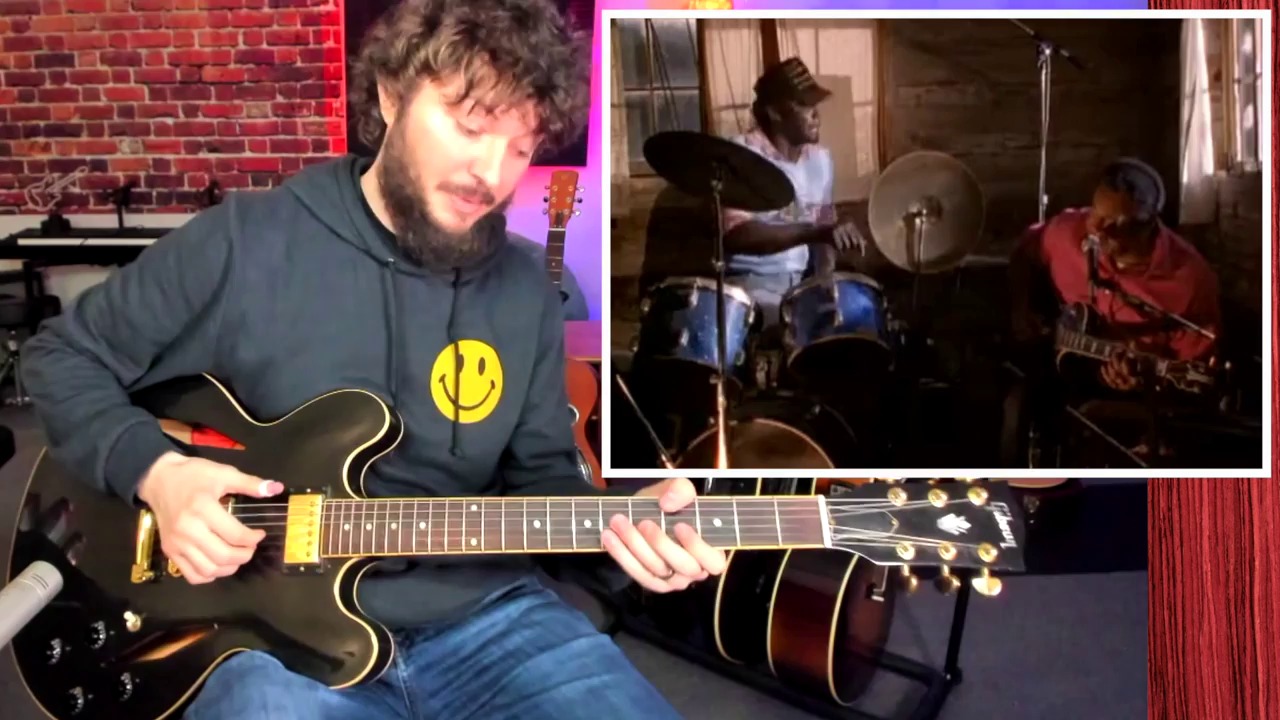
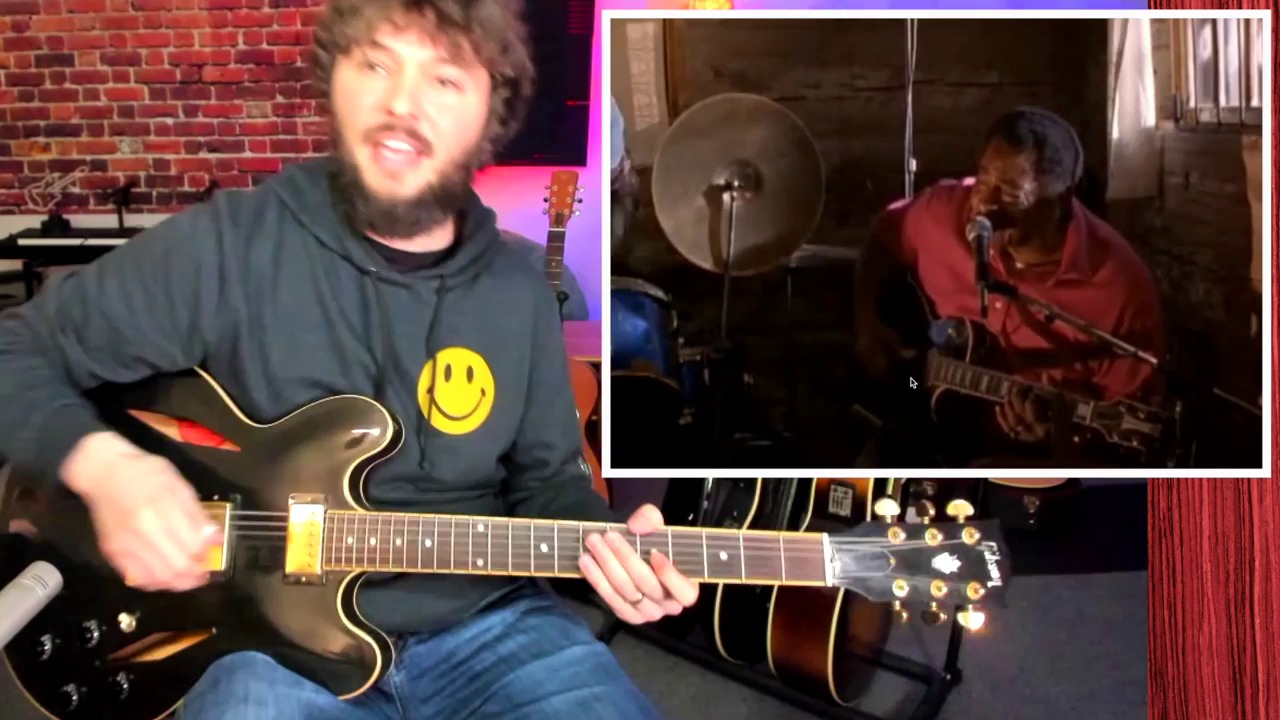
The video introduces Hill Country blues, a rhythm‑driven, upbeat offshoot of Mississippi blues that developed for dancing in juke‑joints. The instructor explains the two main sub‑styles—Delta Drone and Hypnotic Boogie—and demonstrates the distinctive percussive right‑hand technique that gives the genre its “hypnotic” feel. By analyzing key recordings from pioneers Fred McDowell, Junior Kimbrough, and R.L. Burnside, the lesson shows how to produce the genre’s signature groove on electric or acoustic guitar.
Topics Covered
- Hill Country blues vs. Delta blues – Emphasis on upbeat, dance‑able grooves rather than the slower, lyrical feel of Delta blues.
- Two core approaches
- Delta Drone – Repetitive bass‑drone riffs (often on electric guitar, faster pace) layered with minor‑pentatonic or blues‑scale licks.
- Hypnotic Boogie – Highly percussive, rhythmic strumming pattern that functions like a drum beat; the right hand drives the groove.
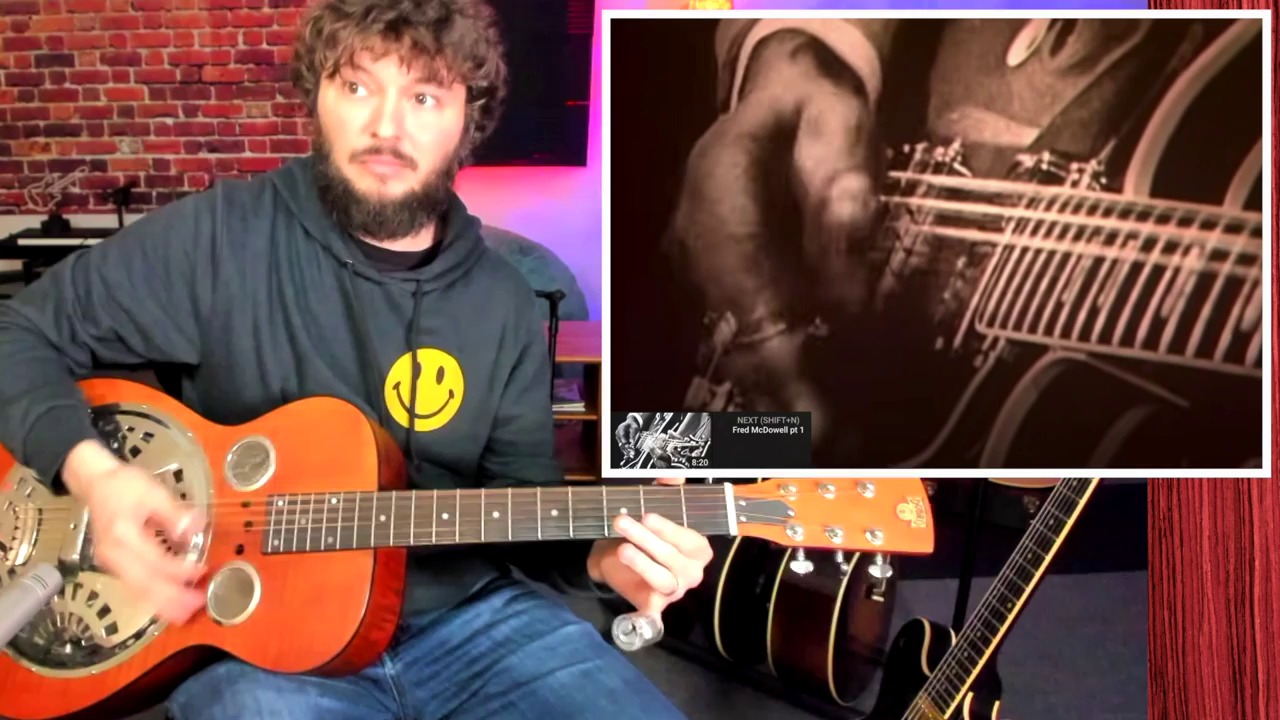
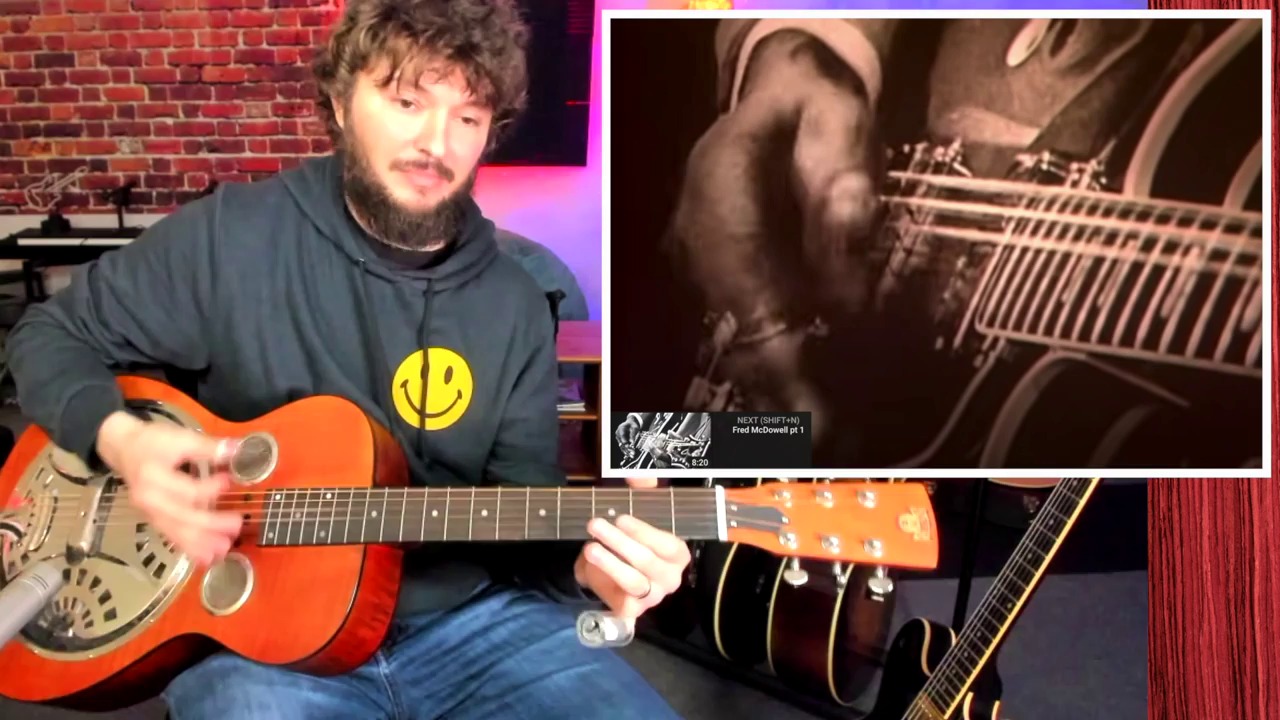
- Right‑hand percussive technique – Alternating thumb (often with a thumb pick) on low strings with index‑finger chops on higher strings; heavy attack on beats 2 and 4; simultaneous muting with left hand for tightness.
- Instrument setup – Open tunings (e.g., open E for McDowell, open C/F for others) and occasional use of slide; thumb‑pick optional but helpful for endurance.
- Style exemplars
- Fred McDowell – Solo slide work in open E, thumb‑pick plus index‑finger pattern, aggressive low‑string hits, muting for syncopation.
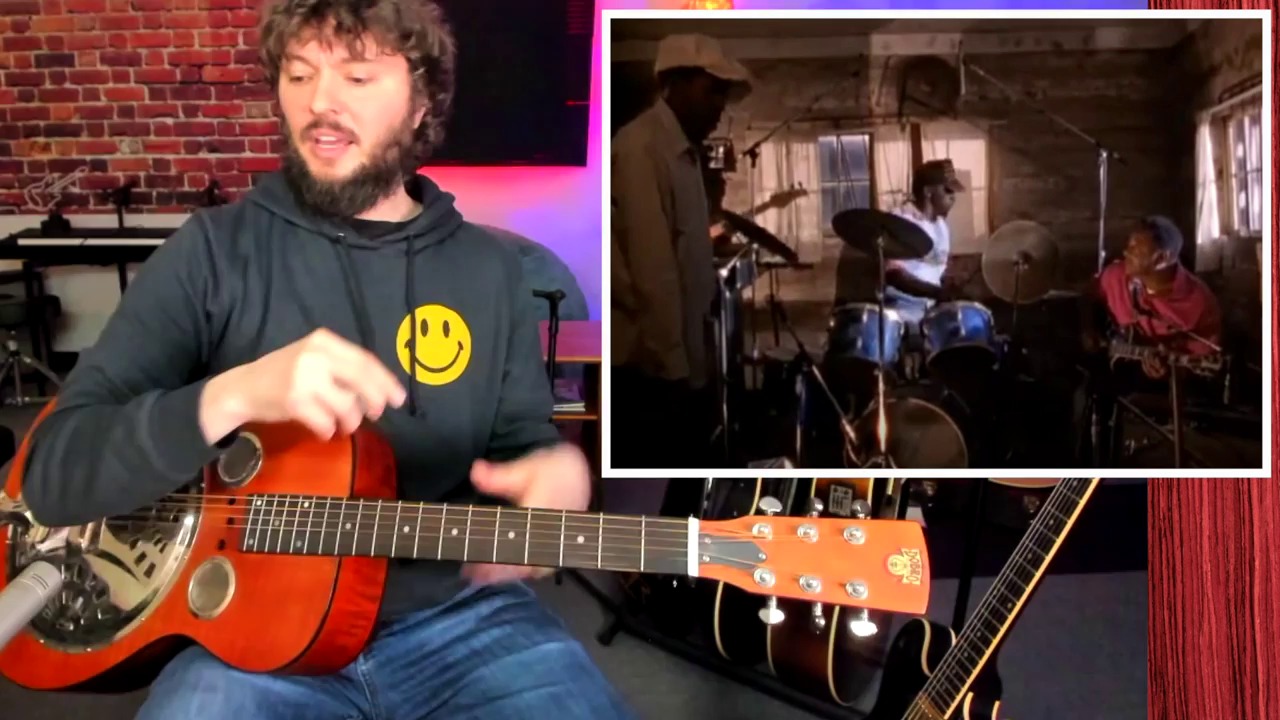
- Junior Kimbrough – Electric, Eb‑standard tuning, monotonic bass drone with repeated riffs, band‑backed juke‑joint feel.
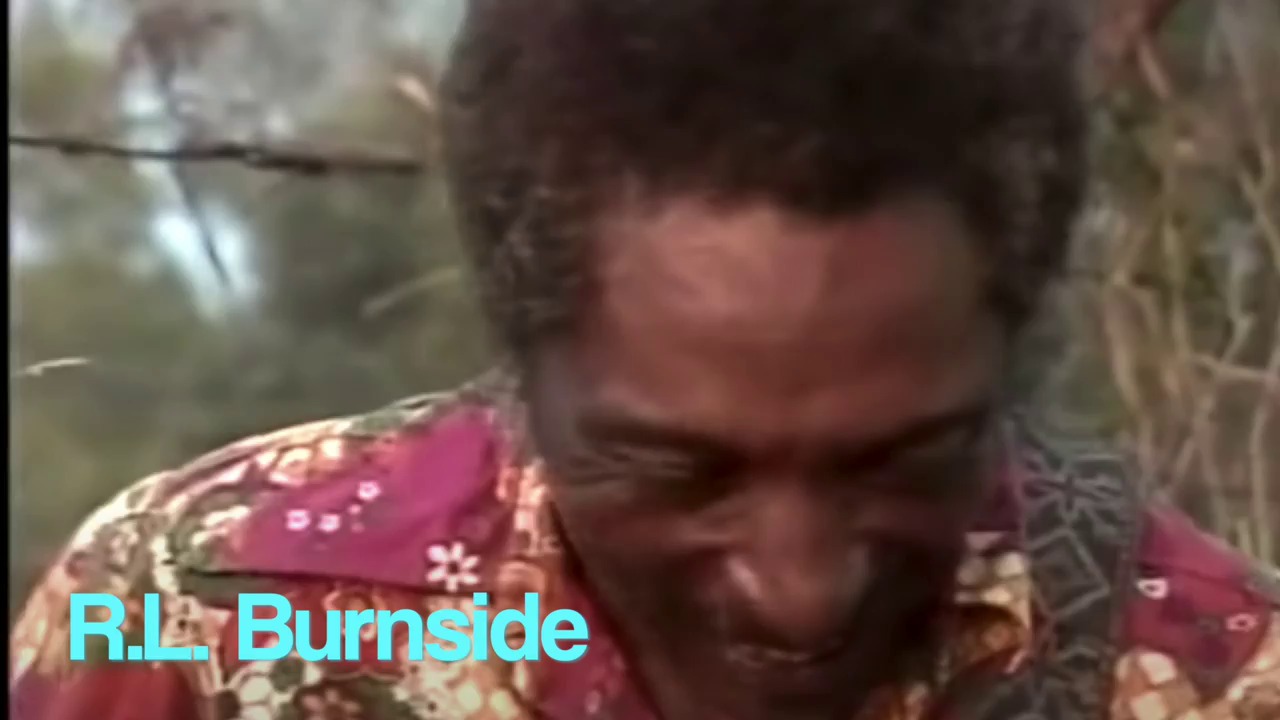
- R.L. Burnside – Solo electric in open F, strong thumb attack on low strings, “2‑and‑4” slams, relaxed hand position, no thumb‑pick required.
- Practice tip – Isolate the low‑string “boom” and high‑string “chuck” parts, then combine; start slowly, then increase speed while maintaining percussive force.
- Future content – Promise of more detailed song lessons and deeper technique breakdowns in upcoming videos.
Key Takeaways
- Hill Country blues is a groove‑centric, percussive style ideal for dancing and jamming without a full band.
- Master the right‑hand pattern: thumb on the low string (often with a thumb pick) + index‑finger chop on treble strings, emphasizing beats 2 and 4.
- Delta Drone focuses on a repeating bass note with overlaying pentatonic licks; Hypnotic Boogie prioritizes a continuous, syncopated strum.
- Open tunings and slide work are common, but the core sound comes from hand technique, not the specific tuning.
- Studying the three masters—McDowell, Kimbrough, Burnside—provides practical models for tone, rhythm, and feel.
- Consistent muting (both hands) keeps the groove tight; aggressive attack prevents the rhythm from sounding “soft.”
- The style can be played solo or with a band; the percussive guitar often substitutes for a drum kit.
Notable Quotes
- “The most important thing is the percussive feel with the right hand—that’s what makes Hill Country blues different.”
- “You’re basically playing a bass line and then adding the percussive ‘chuck’ on top; without it, it doesn’t sound right.”
- “Feel the groove—if people can’t dance to it, you’re missing the point of this style.”
- “A thumb pick isn’t required, but it saves your thumb when you’re slamming hard on those low strings.”
Podcast Script
JORDAN: Welcome to Episode 15 of SlackCasts by PodSlacker — where AI does the watching so you can do the listening. If you want a richer experience with today's episode, visit PodSlacker dot com slash SlackCasts — you'll find a written summary, key frame moments from the video, and an interactive AI chat to explore the topic as deep as you like. Now let's get into it.
MIKE: Today we’re diving into Hill Country blues, that high‑energy, groove‑centric offshoot of Mississippi blues that was born in juke‑joints. It’s less about narrative lyricism and more about keeping people on the dance floor.
JORDAN: Right, the instructor breaks the genre into two core approaches: the “Delta Drone” and the “Hypnotic Boogie.” Both rely on a percussive right‑hand pattern, but they diverge in texture and tempo.
MIKE: Let’s start with the Delta Drone. From what I gathered, it’s essentially a repetitive bass drone—often a single root note—played on electric guitar at a slightly faster tempo than traditional Delta blues.
JORDAN: Exactly. The drone underpins minor‑pentatonic or blues‑scale lead licks. Think of Fred McDowell’s open‑E slide work: a low‑string “boom” on the downbeat, then a quick index‑finger “chuck” on the higher strings, all while the left hand mutes aggressively to keep the rhythm tight.
MIKE: And the percussive element isn’t just an embellishment; the instructor says it’s the defining trait that separates Hill Country from other blues styles. Without that right‑hand attack on beats 2 and 4, the groove collapses.
JORDAN: That’s why he emphasizes thumb‑pick usage. A thumb pick lets you strike the low string with force without fatiguing the thumb, which is crucial because the style demands “slamming” the bass notes repeatedly.
MIKE: Moving to Hypnotic Boogie, the focus shifts from a static drone to a full‑on rhythmic strum that functions like a drum kit. The pattern is thumb on the low string, index‑finger chop on treble strings, alternating in a 1‑2‑3‑4 feel with heavy accents on 2 and 4.
JORDAN: The video demonstrates that by isolating the “boom” and the “chuck,” then recombining them. It’s a classic incremental practice method—start slow, lock in the percussive attack, then speed up while preserving dynamics.
MIKE: What's interesting is that the Hypnotic Boogie works equally well solo or with a band. Junior Kimbrough’s electric jams in Eb‑standard showcase the drone with full rhythm section, while R.L. Burnside often performed solo in open F, still delivering that relentless groove.
JORDAN: Speaking of tunings, the instructor notes open tunings are common but not mandatory. Open E for McDowell, open C or open F for others, and even standard tuning lowered a half step for Kimbrough. The key is that the low‑string drone lands on a root that resonates open, making the percussive pattern effortless.
MIKE: And slide isn’t a requirement either—though many masters employ it for melodic color. The core sound remains the right‑hand technique, not the slide or the tuning. That’s a liberating takeaway for players who lack a slide.
JORDAN: The instructor also points out muting strategy: simultaneous left‑hand palm muting and right‑hand string dampening. This prevents the drone from becoming a wash and keeps each note articulate, especially at higher tempos.
MIKE: Let’s talk tone. McDowell’s resonator dobro in open C gave a bright, metallic edge, while Burnside’s solid‑body electric in open F produced a thicker, overdriven texture. Those tonal choices influence how the percussive attack sits in the mix, but the rhythmic foundation stays the same.
JORDAN: For practice, the video suggests a simple exercise: alternate alternating thumb hits on the low E (or tuned root) with index‑finger downstrokes on the higher strings, then add a single note on the beat‑2 accent. Gradually insert slides or bends, but keep the “boom‑chuck” pattern relentless.
MIKE: That aligns with the strategic mindset: lock down the groove first, then layer melodic ideas. It’s a approach that scales well whether you’re a solo busker or a band member in a modern jam setting.
JORDAN: The lesson wraps up by promising deeper song breakdowns in future videos, which should be valuable for anyone looking to internalize the feel of tracks like “Shake ’Em On Down,” “Kimbrough’s Drones,” or “See My Jumper Hanging On The Line.”
MIKE: So, summarizing the actionable takeaways: master the thumb‑pick or thumb‑only low‑string attack, enforce strict muting, practice the 2‑and‑4 percussive accent, and use open tunings to simplify the drone. That gives you the Hill Country groove engine.
JORDAN: And always remember the ultimate test—if people can’t dance to it, you’re missing the point. Hill Country blues is about that hypnotic, body‑moving pulse, not just clever licks.
MIKE: Before we sign off, any final thoughts on how this style fits into the broader blues ecosystem?
JORDAN: It bridges the narrative depth of Delta blues with the rhythmic drive of later funk and early rock. Its simplicity makes it an ideal entry point for guitarists to explore groove‑centric playing without needing a full rhythm section.
MIKE: Great perspective. That synergy between rhythmic focus and melodic freedom is why Hill Country continues to influence modern roots and indie acts. Thanks for breaking it down.
JORDAN: That's a wrap on today's SlackCast. Head over to PodSlacker dot com slash SlackCasts for the written summary, visual key moments, and an AI chat to dive even deeper into today's topic. Until next time — slack off smarter.