
Key Moments
Summary & Script
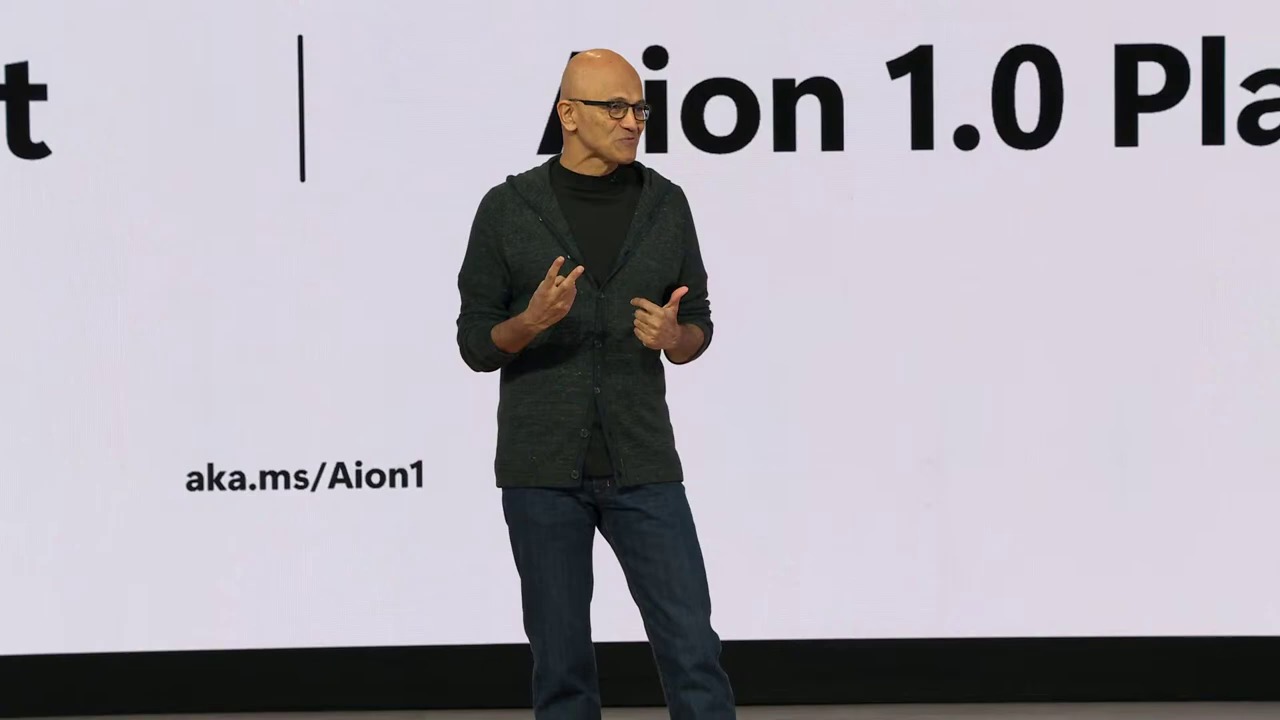
Microsoft Build 2026 | Satya Nadella Opening Keynote
Source: https://www.youtube.com/watch?v=FFMm454fxNA
Video ID: FFMm454fxNA
Overview
The video presents the Microsoft Build 2026 conference, specifically the opening keynote by Satya Nadella, CEO of Microsoft. The focus of the event is on the advancements in AI technology and how developers can harness these technologies to create innovative solutions. Microsoft emphasizes the expansion of AI capabilities across hardware and software, promoting a future where AI operates seamlessly across devices and platforms. Nadella highlights new products and features aimed at enhancing developer productivity and enterprise operations.
New Features & Announcements
- Windows ML and Windows AI Expansion — Increased access to AI compute power across Microsoft's install base, allowing developers to build and run AI locally on devices.
- INVOX Models: Eye on Instruct and Ion Plan — Two new AI models designed to run on Windows, providing advanced reasoning and planning capabilities.
- Next-Generation Qualcomm Snapdragon and NVIDIA SOCs — New hardware integrations bringing enhanced AI capabilities to PCs and devices.
- Surface Ultra Device — New device featuring unified memory, a high-resolution display, and an all-day battery life, integrating NVIDIA SOC for advanced AI functionalities.
- Surface RTX Dev VOX — A developer machine with cutting-edge specs including 1 Peta flop of AI compute and 20 CPU cores targeting peak developer efficiency.
- Windows 365 Developer Edition — Optimized for developer productivity, extending developer tools and Windows capabilities to the cloud.
- Intelligent Terminal with GitHub Copilot — Introduced for Windows, enhancing development environments with AI-driven terminal capabilities.
- Vertical Task Bar — New UI customization available in Windows, as part of user interface enhancements.
- Power Toys Grab and Move — A new feature in Windows for easier window management.
- Defender Async Mode for Developer Scenarios — A developer-centric performance improvement for security scans.
- Microsoft Execution Containers (MXC) — A new policy layer for AI containment and isolation on Windows.
- Open Claw Redundancy on Windows — Enhanced safety features for running Open Claw environments on Windows with MXC's process isolation.
- Project Solara — A new initiative to develop agent-first devices tailored for specific verticals, focusing on enhancing user-agent interactions.
- Verizon DB on Azure — A fully managed SQL server optimized for high availability and scale-out performance.
- Web IQ — A new web grounding service for AI models, offering high-quality, fast responses from web data.
- Microsoft IQ Layers — Unification of Foundry, Fabric, and Microsoft 365 to offer comprehensive enterprise intelligence.
- GitHub Copilot App — A revamped development tool integrating coding assistance, project management, and code generation features.
- Rayfin SDK Partnership with Replit — Back-end as a service to develop and deploy enterprise applications easily within Replit.
- Foundry Hosted Agent Runtime — Long-running agents improved with memory durability, agentic evaluations, and sandbox capabilities.
- Fireworks AI Collaboration — Partnership for bringing diverse open wave models to Foundry.
- Agent 365 — An agent control plane to manage agent identities and access controls, with updates expanding SDK availability.
- MDASH Security System — A multi-model agentic security system providing detailed vulnerability analysis and AI-driven corrections.
- MAI Models Launch — Seven new models introduced, focusing on images, transcription, voice, and coding, aimed at efficiency and accuracy across domains.
- Frontier Tuning — Enhancements in model tuning capabilities enabling personalized learning loops for enterprises.
- Microsoft Discovery Launch — A new platform designed to accelerate scientific discovery through agentic loops.
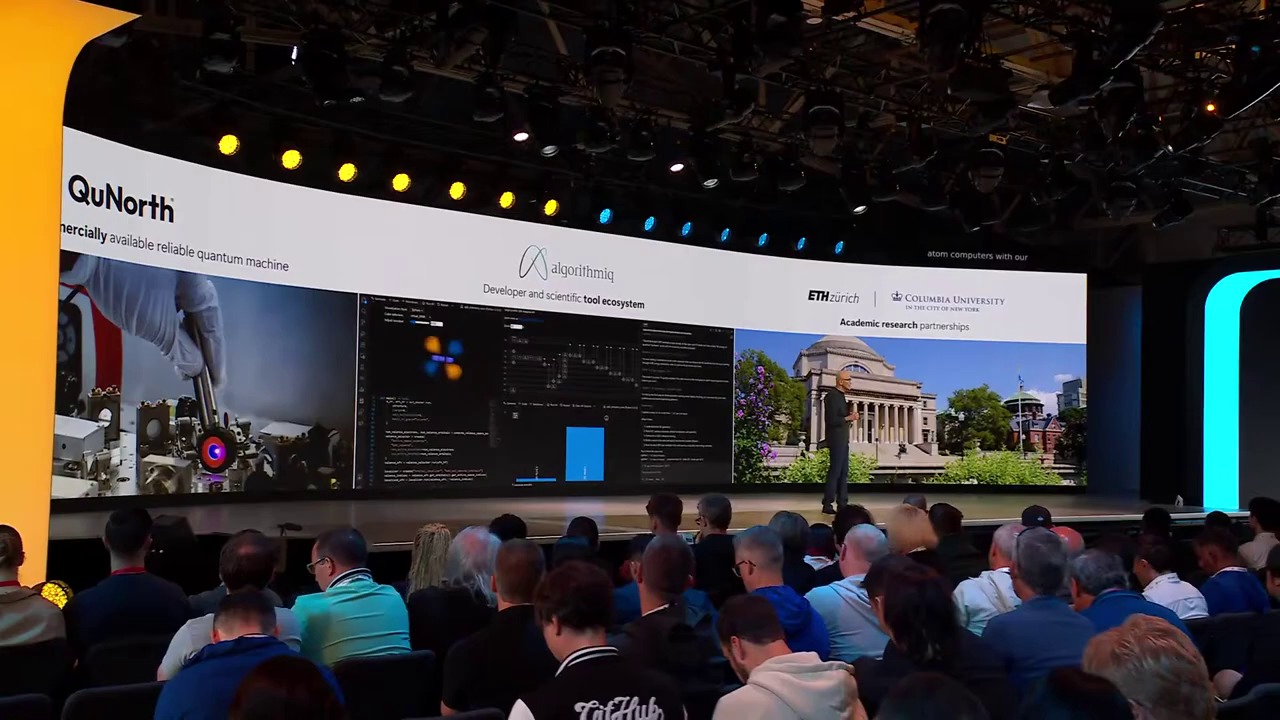
- Majorana 2 Quantum Advancement — Announced significant progress in quantum computing with improved cubit reliability, speed, and form factor size.
Topics Covered
- AI in Developer Tools: Satya Nadella talks about Microsoft's advancements in AI, particularly focusing on integrating AI into existing tools and platforms like Windows and Microsoft 365, empowering developers with cutting-edge technology.
- Hardware Developments: Collaboration with NVIDIA and Qualcomm introduces new devices and hardware platforms that incorporate AI processing capabilities to enhance computational efficiency and user experience.
- Windows Enhancements: Windows updates include new AI-focused tools, improved user interface features such as vertical task bars, and extended capabilities for developers through expansions in Windows ML and AI.
- Enterprise and Cloud Solutions: Focus on extending Microsoft's cloud capabilities with Windows 365 and Azure, providing robust solutions for enterprises to manage, deploy, and optimize their computing needs using AI.
- New Agentic Models: Introduction of several new AI models, including INVOX models for local reasoning and planning on Windows, designed to facilitate more autonomous computing experiences.
- Security and Governance: Microsoft introduces enhancements in AI containment and security measures, such as Microsoft Execution Containers, to ensure safe deployment and operation of AI systems.
- Project Solara's Vision: Microsoft unveils Project Solara, aiming to develop specialized agent-first devices that seamlessly integrate into various industries and workflows.
- Data and Intelligence Services: Introduction of tools like Web IQ and Microsoft IQ layers to provide enhanced data intelligence and contextual responses, integrating enterprise and web-scale information.
- Agent Development Platforms: Satya reveals updates to GitHub tools, incorporating AI for improved productivity and collaboration, and new partnerships to facilitate comprehensive back-end service integrations.
- Quantum Computing Advances: Announcement of Majorana 2, marking improvements in quantum computing with more stable, long-lived qubits and smaller size for scalability.
- Commitment to Super Intelligence: Emphasis on developing responsible and human-centered AI that enhances human agency and promotes well-being, with substantial attention to model optimization and energy efficiency.
- Scientific Discovery and AI Applications: Demonstrates Microsoft's commitment to advancing scientific research through intelligent procedural discovery and real-time lab integrations.
Key Takeaways
- Microsoft is focusing on making AI omnipresent by integrating it into hardware and software across devices, aiming to empower developers with enhanced capabilities.
- Significant hardware announcements, such as next-gen Qualcomm Snapdragon and NVIDIA SOCs for AI, illustrate Microsoft's commitment to advancing the computational infrastructure.
- New software tools and frameworks are designed to simplify and enhance the developer experience, unleashing more powerful AI functionalities.
- Microsoft Marketplace and platform are structured to facilitate the discovery and integration of custom-developed applications and enterprise tools.
- Advancements in enterprise AI offerings, like Windows 365’s developer enhancements, reflect Microsoft’s drive to enable robust cloud computing solutions.
- Microsoft's initiatives in AI governance, such as execution containers and security measures, underline its priority in maintaining secure AI ecosystems.
- MAI models and Frontier tuning represent Microsoft's strategy to allow enterprise customization and fine-tuning at an unprecedented scale.
- Cutting-edge developments in quantum computing underscore Microsoft's leadership in the field, promising significant advancements in computational speed and reliability.
- Partnership announcements with major industry players illustrate Microsoft's strategic vision to collaborate and strengthen its ecosystem.
- Microsoft Discovery's launch emphasizes the potential of AI in transforming scientific exploration by automating and enhancing research processes.
Notable Quotes
- "The core challenge today is not just to build AI, but to harness its power to create opportunities for everyone."
- "We are enabling a future where your AI assistant lives across the devices you work with, seamlessly integrating into your everyday life."
- "The story we need to write is one where technology unlocks opportunity, not just for a few, but for everyone around the world."
Podcast Script
MIKE: Welcome to Episode 20 of SlackCasts by PodSlacker — where AI does the watching so you can do the listening. If you want a richer experience with today's episode, visit PodSlacker dot com slash SlackCasts — you'll find a written summary, key frame moments from the video, and an interactive AI chat to explore the topic as deep as you like. Now let's get into it.
JORDAN: Today we're diving into the Microsoft Build 2026 Opening Keynote, and it's a blockbuster. Microsoft's future in AI took the center stage. Satya Nadella detailed a new frontier for local AI on Windows, and cloud advances expanding AI capabilities.
MIKE: Absolutely, Jordan. The push for Windows to support local AI computation with Windows ML and Windows AI stands out. They are taking full advantage of the existing hardware, namely the full GPU install base. The announcements widens the capability for on-device processing, minimizing reliance on cloud connectivity.
JORDAN: That shift is crucial for leveraging AI to its fullest, especially in secure or bandwidth-limited environments. It makes devices more autonomous and responsive too, which is particularly relevant for industries looking to maintain strict data governance and control.
MIKE: And Jensen Huang from NVIDIA spoke about how their next-gen SOC integrates AI capabilities seamlessly into hardware. Microsoft and NVIDIA's collaboration amplifies this local compute strategy, enhancing devices' AI proficiency.
JORDAN: That hardware-software synergy is a step in shaping personal AI systems, as Jensen put it — moving from PC as a personal computer to personal AI. This integration will change our interaction dynamics profoundly.
MIKE: Let's not forget the announcement of Surface RTX Dev VOX. It is a dream machine for developers, packing an impressive AI compute capability with a Petaflop performance. All this power is aimed to favor rapid engineering and deployment for complex AI models.
JORDAN: Speaking of development, the Windows 365 Developer Distribution is cloud-optimized, allowing developers maximum productivity and innovation unattached from traditional desktop boundaries.
MIKE: Yes, and coupled with GitHub Copilot integration into their new Intelligent Terminal, it’s quite the powerhouse for developers. It feels like Microsoft is making a conscientious effort to streamline the development experience by bridging AI's cognitive capabilities with collaborative tooling.
JORDAN: It's compelling to see the focus on agentic systems in Windows and Foundry too. It’s not just about AI capability but building an operational fabric that extends from local devices to expansive cloud infrastructures like Azure.
MIKE: Exactly, Microsoft Execution Containers provide the necessary framework for governance and security of these agentic systems, ensuring that there’s a secure execution layer. This will reassure enterprises implementing AI on a grand scale.
JORDAN: That dovetails perfectly into the enhancements in Microsoft IQ layers, essentially grounding AI with valuable enterprise data to deliver more intelligent solutions. It represents a significant step for enterprises in surfacing actionable intelligence from complex data landscapes efficiently.
MIKE: The project Solara is worth mentioning here too. Touted as purpose-built for "agent first" applications, it bridges existing form factors and invites innovation in new device types, reflecting a clear intent to further embed AI into daily enterprises tasks.
JORDAN: Those agent-first devices could be the missing link in making AI a peripheral advisor in workflows, especially in high-pressure fields like healthcare, where decisions need to be fast and supported by data.
MIKE: Precisely! Speaking of healthcare, what's your take on that partnership with the Mayo Clinic to develop healthcare models? That's quite revolutionary.
JORDAN: Mustafa Suleyman detailed how Microsoft's collaboration with the Mayo Clinic creates AI that assists healthcare providers, aiding decision-making while prioritizing patient safety. It's a classic example of technology amplifying human expertise rather than replacing it.
MIKE: That’s the essence of what they call humanist superintelligence, isn't it? Aligning AI models with operational realities while keeping humanity center stage in every decision and outcome.
JORDAN: And on the quantum front, did you catch the introduction of Majorana 2? Quantum computing advancements are promising to redefine computational speed and capability, with implications set to ripple across every scientific discipline.
MIKE: Majorana 2 brings a thousandfold increase in reliability for qubits, supporting practical quantum computations that weren’t previously possible at this scale. It's engineering progress at its finest.
JORDAN: Combine that with the ambitious scope of Microsoft Discovery, which aims to automate scientific processes and reduce the cycle time for innovation. Applications in sustainability, healthcare, or even material design have a significant impact.
MIKE: Microsoft is setting a new landscape in scientific research, using agentic systems to accelerate discovery windows with an impressive loop of integrated labs, models, and computational power.
JORDAN: It’s all fascinating. The breadth and depth of these individual initiatives converge to underline the potential of this interconnected frontier ecosystem. They all revolve around making intelligent systems seamlessly augment and empower human capabilities.
MIKE: Indeed, they are visionaries in exploring these frontiers, not just creating standalone models but aiming at planetary scale adaptability. As Satya Nadella put it, it's about the value you can build and compound in this frontier ecosystem.
JORDAN: The keynote certainly depicted a future where biased models of ownership, open ecosystems, and collaboration can redefine not just markets but operational efficiencies at scale. These enterprise-grade innovations hold the promise of unfurling new verticals of growth.
MIKE: And listeners, this transformational wave isn’t limited to tech giants like Microsoft. It provides immense opportunity for developers, enterprises, and ecosystems globally to shape this AI-driven world thoughtfully for progress and prosperity.
JORDAN: That collective ecosystem push is critical to ensuring that AI's benefits are equitably distributed and harnessed to unlock human potential meaningfully across geographies and demographies.
MIKE: Well said, Jordan. Before we close, any thoughts on where practitioners should focus their attention moving forward after this keynote?
JORDAN: I’d suggest deep diving into those areas where AI can be interwoven with existing business processes to amplify outcomes. Understanding Microsoft's AI tools and exploring their practical application could unveil new efficiencies and opportunities.
MIKE: And don't forget, testing these new announcements through Insiders Build or preview versions can help enterprises prepare their infrastructures for upcoming transitions without losing pace. Stay ahead of the curve.
JORDAN: Exactly, get hands-on, experience the changes, and design your strategies to accommodate this wave of innovation effectively.
MIKE: That's a wrap on today's SlackCast. Head over to PodSlacker dot com slash SlackCasts for the written summary, visual key moments, and an AI chat to dive even deeper into today's topic. Until next time — slack off smarter.