
Key Moments

Summary & Script
The Gemini Enterprise Roadmap (AMER)
Source: https://www.youtube.com/watch?v=Kcy2V_XHEh0
Video ID: XHEh0
Overview
The video, titled "The Gemini Enterprise Roadmap (AMER)," is a 46-minute presentation led by Jamie Deggeart, a product leader at Google Cloud AI. It presents an overview of Google's Gemini Enterprise Agent Platform, highlighting recent updates and announcements. The session is part of a quarterly roadmap series and features demos from team members Dimitri and Shubham. The overarching goal is to inform viewers about the capabilities of Gemini Enterprise in building, scaling, governing, and optimizing AI agents to transform businesses with generative AI technologies.
Speakers & Guests
- Jamie Deggeart — Product leader on Google Cloud AI who sets the stage for the roadmap session and elaborates on Gemini Enterprise's capabilities and missions.
- Dimitri — Presenter of a demo on new features related to agent mode within Gemini Enterprise.
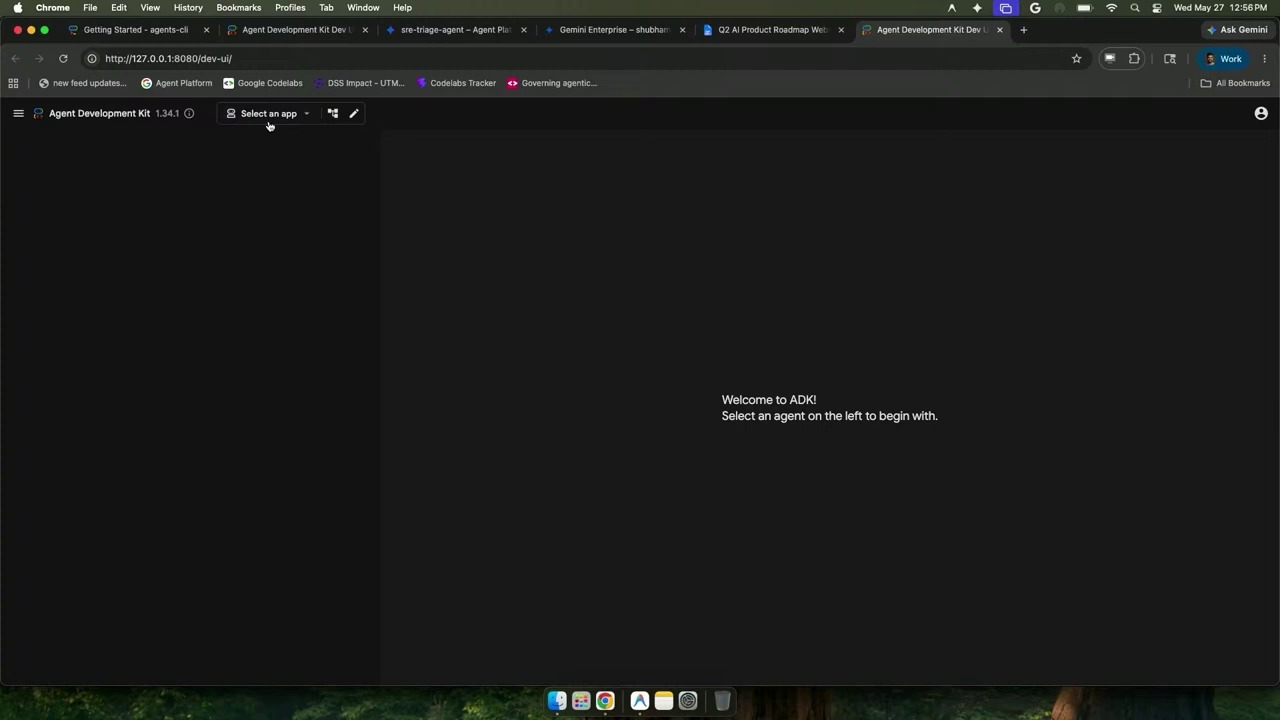
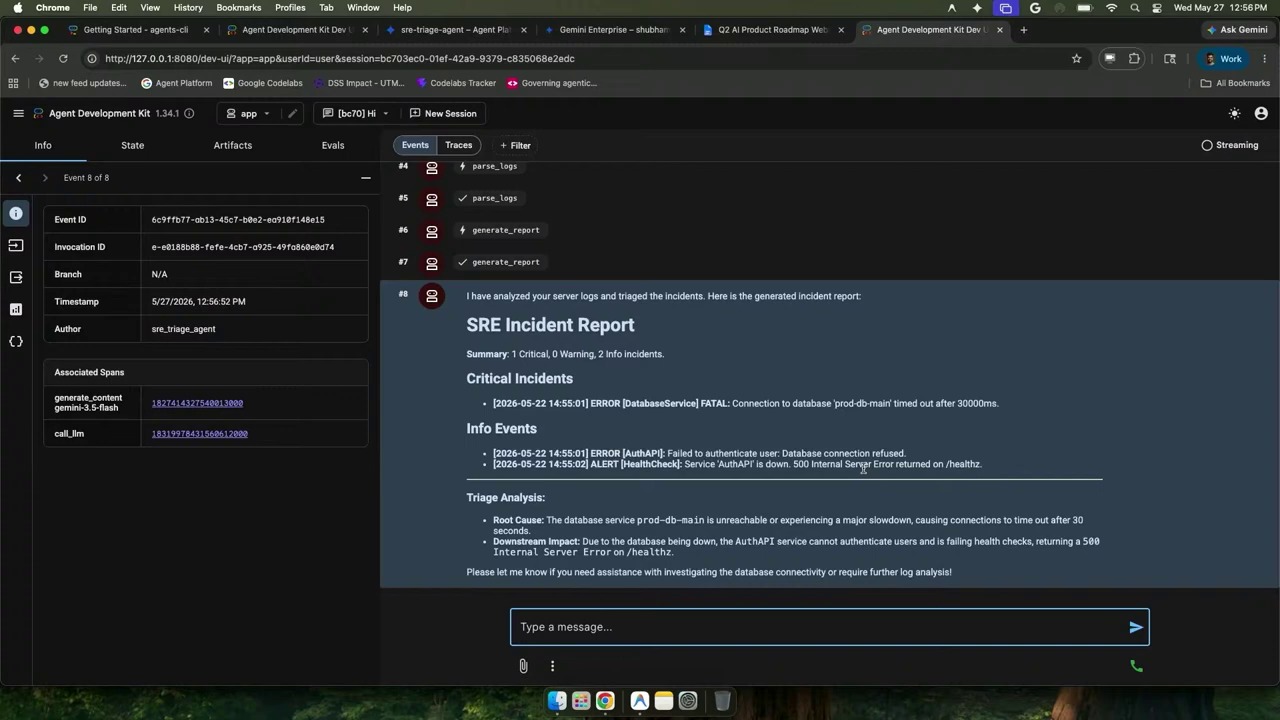
- Shubham — Demonstrates the practical application of Antigravity 2.0 in managing the entire agent development lifecycle.
New Features & Announcements
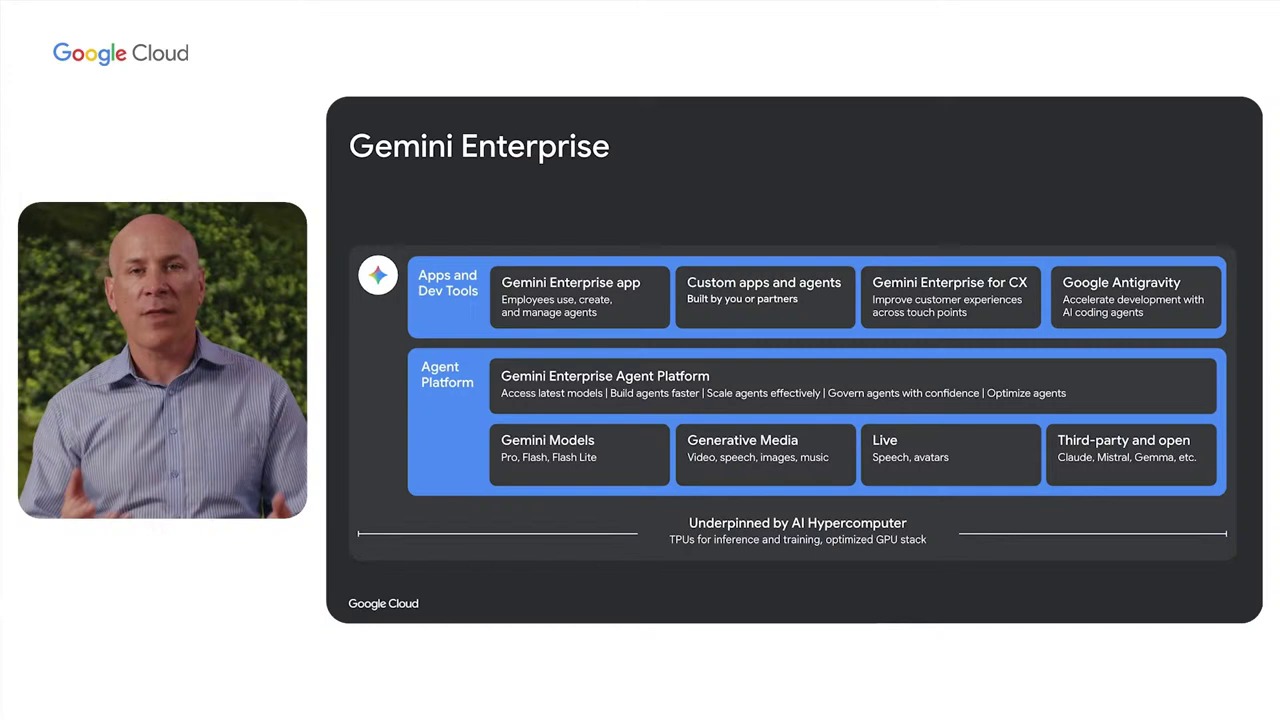
- Gemini Enterprise Agent Platform — Introduced as the foundation for building, scaling, and governing AI agents within organizations.
- Antigravity 2.0 — New updates for agentic development using a CLI or desktop app, generally available.
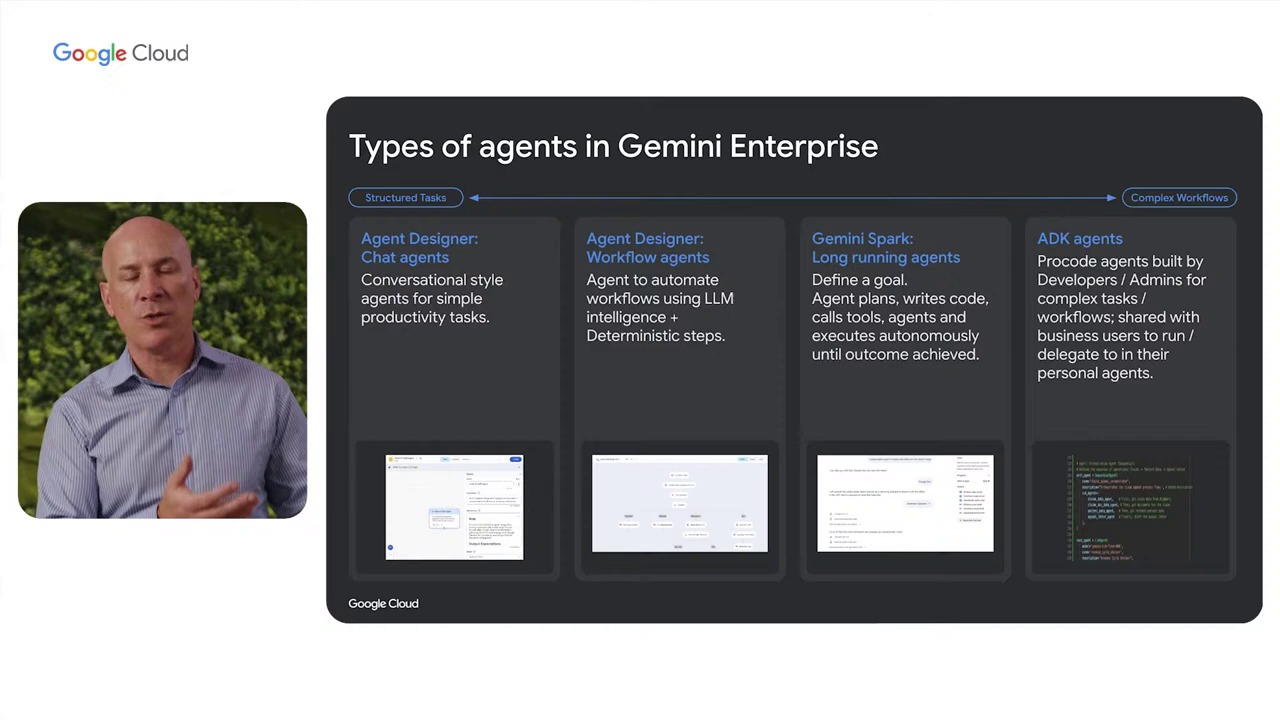
- Gemini Spark — Allows users to create an agent with just a prompt, coming soon to Gemini Enterprise app.
- Managed Agents API — Enables developers to build an agent by specifying configuration and defining outcomes, available in preview.
- Gemini 3.5 Model Family — Including Gemini 3.5 Flash, which excels in coding, reasoning, and real-world tasks, generally available.
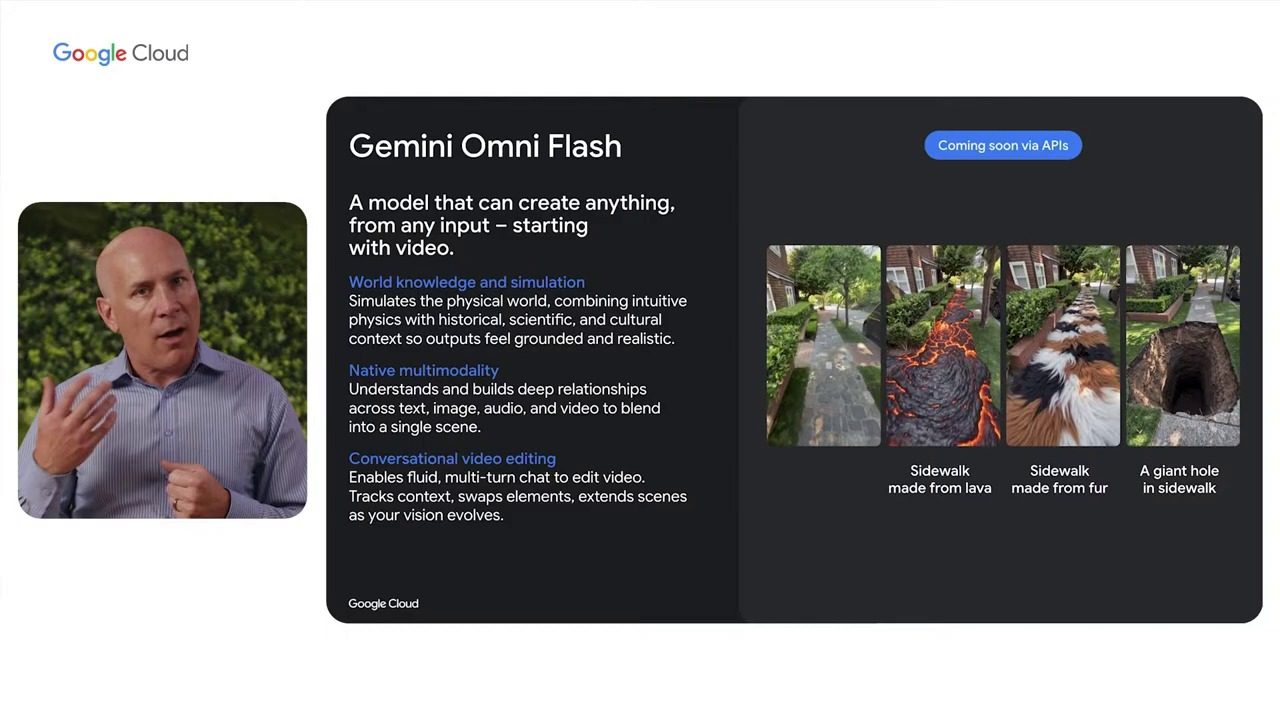
- Gemini Omni — A new family of models coming soon.
- ADK 2.0 — Released to general availability, providing new development tools for building agents.
- Code Sandbox and Compute Use Sandbox — Tools for writing code and creating tools securely, with Code Sandbox generally available.
- Agent Gateway, Identity, and Registry — Introduced for governance and security purification.
- Agent Observability, Code Mentor, and Alpha Evolve — New offerings for optimizing and securing agent operations.
- Gemini Enterprise Mobile Apps — New apps for iOS and Android to access agents.
- Integration with Slack — Allows interactions with agents via Slack.
- Projects Feature — A shared workspace for employees to collaboratively work with agents.
- Deep Research V2 and Data Insights — New capabilities for optimizing organizational workflows using AI.
- Gemini Spark demo — Shown as a sneak peek into how it can help sales leaders manage client meetings.
- Language Support Expansion — New languages in ADK and compliance enhancements for broader usability.
Topics Covered
- The four primary challenges organizations face with AI: creating quality agents, integration across systems, ensuring security and trust, and keeping pace with AI innovation.
- The capabilities of Gemini Enterprise in overcoming these challenges through its robust platform that supports building, integrating, and optimizing agents.
- Antigravity 2.0's introduction, offering various tools like CLI and the desktop application for seamless agent development and management.
- Detailed roadmap for the Gemini Enterprise agent platform, emphasizing security, scalability, and governance solutions.
- A comprehensive look at the Gemini model family updates, including the launch of Gemini 3.5 Flash and the soon-to-be-released Gemini Omni models.
- Shubham's practical demo showcasing how Antigravity 2.0 can automate the agent development lifecycle from conception to deployment.
- New features in the Gemini Enterprise app, such as user-friendly mobile applications, integrations with common workplace tools like Slack, and the innovative Gemini Spark.
- Ali Rana covering the strategic roadmap for the Gemini Enterprise customer experience, highlighting the integrated platform's functionality in creating seamless customer journeys.
Key Takeaways
- Gemini Enterprise aims to tackle key industry challenges by providing tools to build high-quality, secure, and efficient AI agents.
- The platform is built to be modular, allowing customization and integration with various models and frameworks.
- Recent updates focus on improving agent governance, security, and operational efficiency through new APIs and services.
- Google's investment in developing an open and flexible AI ecosystem is evident with continuous enhancements in language and model capabilities.
- Demonstrations highlighted Gemini's powerful no-code and low-code options, enhancing accessibility and scalability for enterprises.
- Gemini Enterprise is strategically expanding its capabilities to provide comprehensive customer experience solutions through integrated AI-driven tools.
Notable Quotes
- "AI agents are really the next frontier." — Jamie Deggeart, highlighting the transformative potential of AI agents in businesses.
- "Developing on the Gemini Enterprise agent platform does not lock you into one model." — Jamie Deggeart, emphasizing the flexibility of the platform.
- "We are delivering that future to your production environments today." — Ali Rana, delineating the immediacy and readiness of Gemini's solutions for enterprise use.
Podcast Script
JORDAN: Welcome to Episode 21 of SlackCasts by PodSlacker — where AI does the watching so you can do the listening. If you want a richer experience with today's episode, visit PodSlacker dot com slash SlackCasts — you'll find a written summary, key frame moments from the video, and an interactive AI chat to explore the topic as deep as you like. Now let's get into it.
MIKE: Today we're delving into Google's ambitious roadmap for the Gemini Enterprise platform. It's a comprehensive overview of how Google is honing its AI agents to transform enterprises, focusing not only on creating high-quality agents but also on scaling and governing them effectively.
JORDAN: Exactly, Mike. Jamie Deggeart from Google Cloud AI kicks off by identifying four primary challenges that organizations face with AI: creating quality agents, integration across systems, ensuring security and trust, and keeping pace with AI innovation. They are foundational blocks of the strategy for Gemini Enterprise.
MIKE: These aren't just abstract challenges. They're practical hurdles for any organization looking to implement AI effectively. Jamie talks about transforming business operations with generative AI, which is crucial in times where integration and data security are paramount.
JORDAN: Speaking of integration and security, the introduction of the Gemini Enterprise Agent Platform marks a significant advancement. It integrates seamlessly with Google Cloud features like Vertex AI, ensuring robust scalability and governance. This is more than just about model hosting; it's about full lifecycle management of AI agents.
MIKE: And let's not overlook the governance aspect. Jamie highlights the importance of trust, which is addressed through tools like the Agent Identity Service and Agent Registry. Governance ensures that these agents operate securely, something that's critical when you're handling potentially hundreds of agents within an organization.
JORDAN: Yes, and the announcement of Antigravity 2.0 really takes agent development to the next level. Developers can leverage both a CLI and a desktop app, making agentic development more accessible and streamlined. Shubham's demo showcased its ability to automate the complete lifecycle of agent development from conception to deployment.
MIKE: It's also interesting to note the flexibility they're offering. The platform's not locking developers into one model or framework. You can use ADK, Managed Agents API, or third-party options like LangChain. This kind of flexibility is crucial as it allows organizations to adapt AI implementations to their unique environments.
JORDAN: That's right. And we need to talk about the Gemini Model updates. The introduction of the Gemini 3.5 model family, particularly the Flash variant, is a game-changer. It's generally available now and excels in coding, reasoning, and tasked execution, outpacing previous models in speed and cost-efficiency.
MIKE: Jamie even compared it directly to competitors like Claude Sonnet, highlighting its superiority in performance at a reduced cost. For enterprises, this means being able to run complex tasks more efficiently and affordably, potentially broadening the scope of applications they can support.
JORDAN: In addition to Gemini Flash, there's the anticipation of Gemini Omni, a new multimodal family of models. It's designed to handle complex transformations, like converting audio inputs into video outputs. That's a significant leap in terms of multimodal capabilities.
MIKE: Exactly. The multimodal approach is what could set Gemini apart in fields like media production and advanced customer interaction. Theo promises that these improved capabilities won't break the bank with cost-effective execution.
JORDAN: Let's discuss Gemini Spark, introduced as a tool to create agents through simple prompts, demonstrating its influential prompt adherence through Dimitri's demo around preparing sales scripts. It showcased a vision of automating routine yet complex tasks seamlessly.
MIKE: This democratizes AI agent creation, lowering the barrier for employees to leverage AI without in-depth technical knowledge. Plus, being able to execute these prompts in a secure sandbox is invaluable for industries where data security is a concern.
JORDAN: Absolutely, and let's not forget the Managed Agents API. It allows developers to specify an agent configuration and desired outcomes. It simplifies the deployment process significantly by automating agent creation, reducing development overhead.
MIKE: It's impressive how this API aligns with Gemini's vision of bringing the best of Google AI into the enterprise world. The promise of scalability and easy integration ensures that even complex workflows can be managed effectively.
JORDAN: And then there's the infrastructure for governance and security, which really can't be overstated. With features like Agent Gateway and new APIs for content detection and anomaly filtering, Google's addressing the concerns around AI reliability and regulatory compliance head-on.
MIKE: Data assurance is key, especially with increased scrutiny on AI's implications for user privacy and consent. Google's commitment to open and flexible AI ecosystems further highlights its strategy in adaptable AI advancements.
JORDAN: The roadmap also expands into practical aspects with mobile app support and Slack integration. It's all about bringing AI functionality right to where employees are most active, streamlining workflows and enhancing productivity.
MIKE: Integration with Slack is a smart move, allowing iterative agent interactions within a tool many businesses already use. Consider the enhanced communication efficiency this brings to both small teams and large enterprises.
JORDAN: On the topic of enhancing workplace tools, I find it noteworthy that they're expanding upon the Projects feature to foster collaborative spaces for employees to harness AI capabilities together. This is a huge boon for collective intelligence and organizational efficiency.
MIKE: True, translating AI into tangible business value means making it a part of everyday workflows. The more seamlessly these technologies fit into existing systems, the more naturally AI will become integral to business operations.
JORDAN: We should delve a bit into the security sandbox tools, particularly the Code Sandbox and Compute Use Sandbox. These provide essential secure environments for writing and testing code, ensuring safe development practices.
MIKE: Absolutely, creating these secure environments is central to any robust AI infrastructure, especially when security vulnerabilities could lead to massive data breaches or operational disruptions.
JORDAN: There's also continued emphasis on advancing language support. Google hints at an expanded language reach beyond current offerings. Enhancements like these are crucial for broadening the AI's global applicability.
MIKE: Language diversity is vital for inclusivity and global reach. As Gemini Enterprise aims to offer widespread utility, accommodating more languages and regional dialects ensures its solutions resonate with a broader audience.
JORDAN: And looking ahead, Jamie touched upon the strategic expansion for Gemini Enterprise in customer experience, painting a picture where AI is intricately woven into the entire customer relationship lifecycle.
MIKE: That's where the high-level synergy between AI and customer service steps up. Google's harnessing AI not just to enhance interactions but to offer comprehensive, integrated solutions that unify disparate customer touchpoints.
JORDAN: Ali Rana's insights into minimizing fragmentation and creating seamless customer journeys reflect this aim. CX Agent Studio plays a pivotal role here, optimizing end-to-end customer pathways with coherent AI-driven support structures.
MIKE: What's noteworthy is the focus on achieving a grounded context and reliability in AI outputs. It’s not just about flashy demos, but delivering substantial enterprise tools validated in complex environments.
JORDAN: The investment into evaluations and real-time analytics echoes this, providing firms with tools to navigate AI's rapid changes and ensure that systems don’t just function, but excel where most needed.
MIKE: Looking at the big picture, Google's roadmap for Gemini Enterprise is about marshalling existing AI capabilities into formidable business solutions while providing a flexible and secure framework for ongoing advancements.
JORDAN: With Google's focus on genuine usability and tailored solutions, enterprises can seemingly seamlessly integrate cutting-edge AI models with existing infrastructure to drive practical, tangible outcomes.
MIKE: And with this momentum, we can expect Google’s advances in enterprise AI to set notable standards for others to follow. As they roll out these innovations, they’ll shape the expectations and possibilities for AI applications in enterprise settings.
JORDAN: That rounds us out nicely for today. We've covered everything from Antigravity to the Gemini model series and its potential impact on enterprise-level AI harmonization.
MIKE: It’s clear that Google is positioning itself at the forefront of AI and enterprise transformation, not just with technology, but through a strategic lens focused on practical, scalable, and governance-oriented solutions.
JORDAN: That's a wrap on today's SlackCast. Head over to PodSlacker dot com slash SlackCasts for the written summary, visual key moments, and an AI chat to dive even deeper into today's topic. Until next time — slack off smarter.